

Welcome Avatar! Another day has gone by and the world has not ended. If you have looked at social media, the recent doom loop has suggested both the UK and Japan should prepare for days/weeks/months of mass cyber disruption. “Stock up on necessities like water and tin goods!”
In the meantime, absolutely nothing has happened.
The only real interesting data points are as follows: 1) Anthropic filed its S-1 to raise a bunch of money - companies do this when they think near term valuation is as high as it will get for a period of time and 2) Microsoft is downsizing substantially by offering buyouts for >25% of its employees.
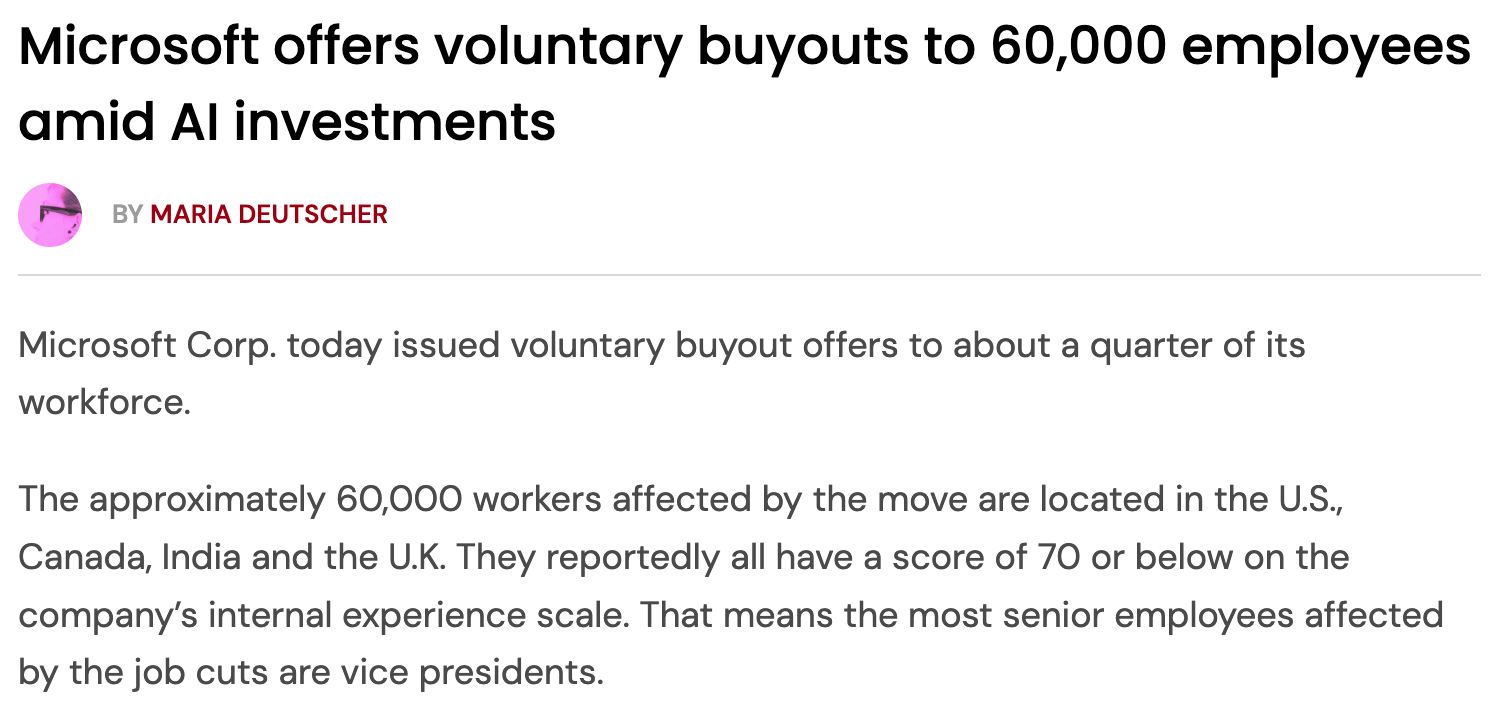
We’re going to start with Anthropic and move to the MSFT read.
Part 1: Looking at Anthropic
Why They Need to Raise and Go Public
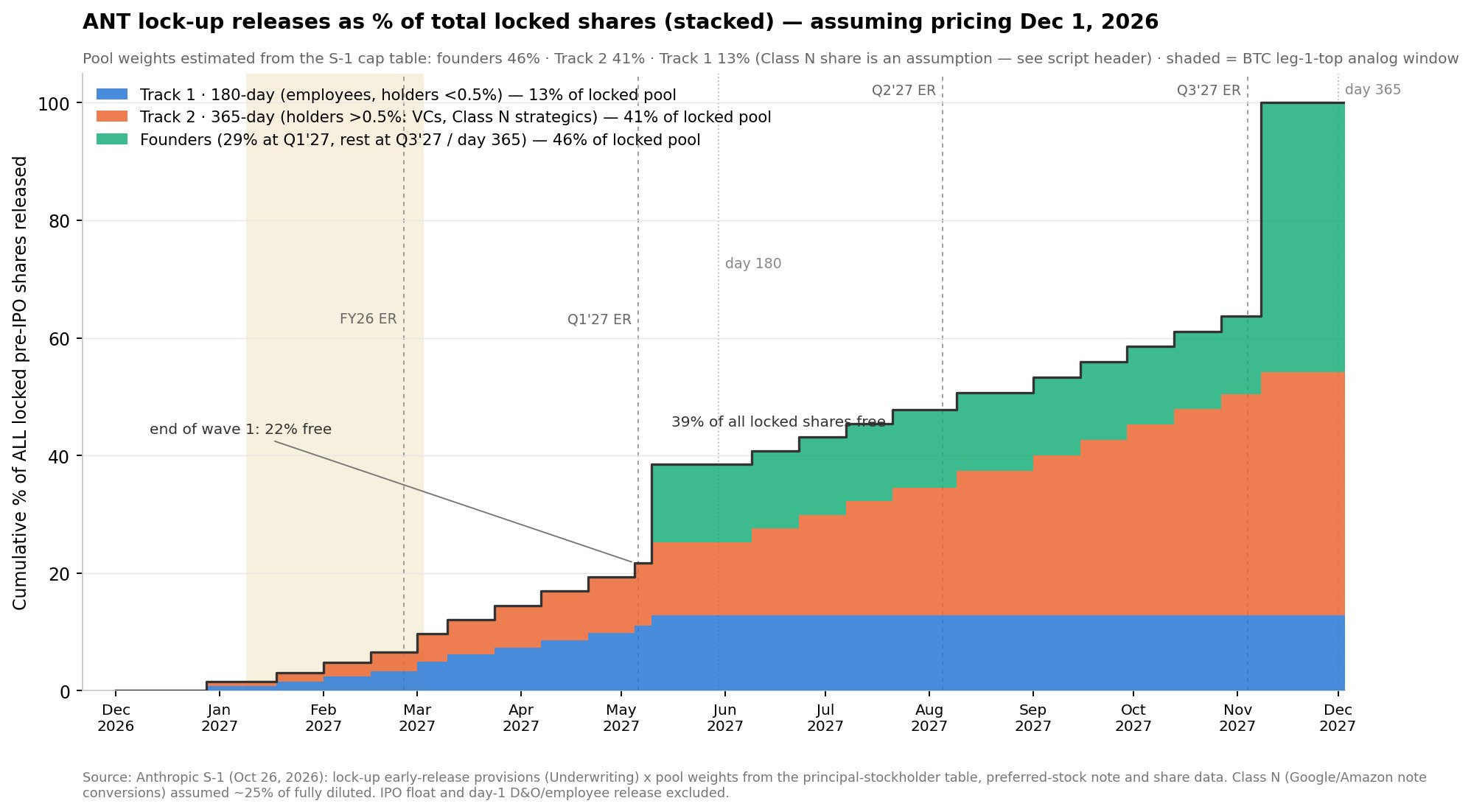
Looks like the Company has a 90%+ shot of being publicly traded by the end of the year. Paid subs already know how these hyped IPOs work but if you want a good indication of how badly they want this to go out, you can look at their lock-up schedule (designed to give investors confidence with regards to a sudden drop in share price)
Combine this with their current commitments and the clear message is that they need the money to remain at the edge of AI. Last we checked $321.4B is quite a bit of spending!
Anthropic IPO Lease Commentary

Focusing just on this number, it actually lines up pretty well with their funding plans. They should have more than enough runway when they raise the $100B (they will get it as long as they can get out and trade in the public markets)
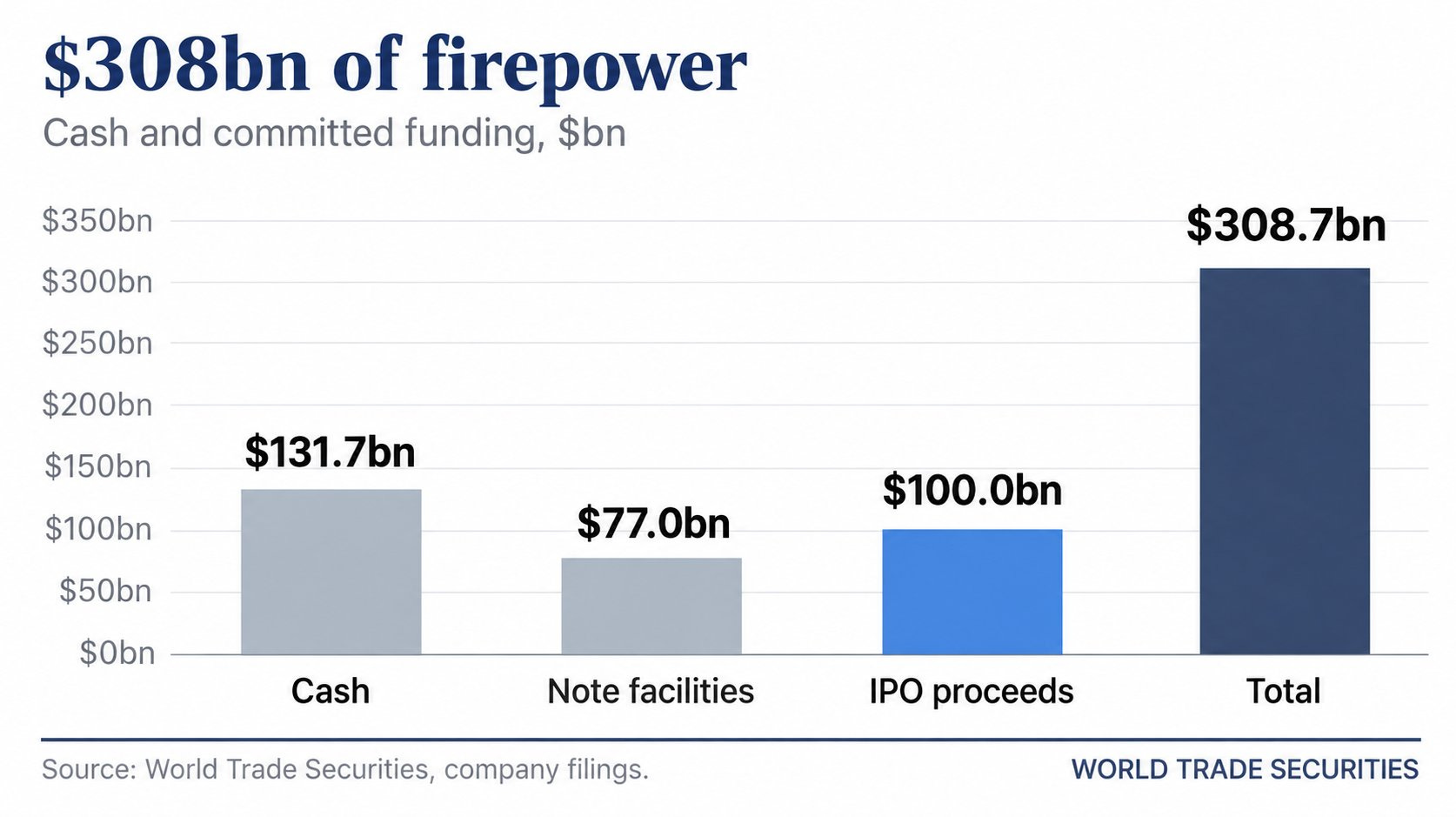
TL;DR they intend on spending like crazy to be the leader in AI and have already decided where every penny of that $100 billion is going to go.
Weird Stuff Under The Hood
Beyond the big capex spending and big raise, here are some interesting things from the filing that are a bit confusing.
Sales and Marketing
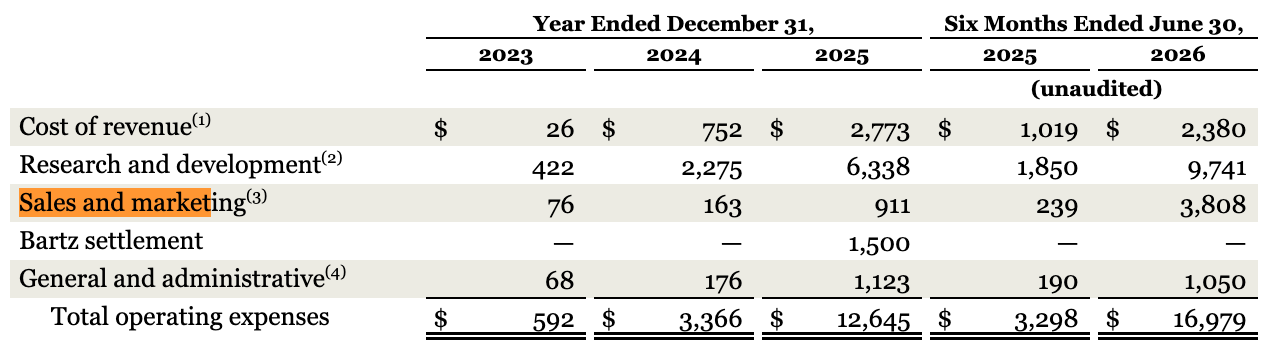
Unsure why this is growing from $239M a year ago to $3,808 million in just a year. Perhaps they needed to start collecting users rapidly ahead of this IPO but we’ve never really seen that type of sudden step function in a tech company.
Revenue Retention is Insanely Good

This means that once people use it, they become hooked on it like a drug. Societal impact aside, this is great for a business. Essentially people outsource their thinking to the machine
Another way to think about this, there is a real path for them to outgrow the insane spending they are committed to.
Customer Concentration

This isn’t too bad all things considered. We expected this to be much higher and could argue that this is quite low vs where it should be. Retail doesn’t have the guts to build code or try to do things by themselves, so we expected the amount to be heavily concentrated to a few people who have actually used it to automate and scale their businesses.
Revenue Per Employee is High
You’re looking at about $6.6M per employee in terms of revenue. If your entire business premise surrounds AI taking jobs, it would make sense that Claude is doing a ton of the work for them.
We will caveat this with a huge and annoying “but”. They have funded a chunk of their growth with convertible debt. The agreement with Broadcom allows them to pay for some lease payments without an actual cash outlay. This has to count for something as it relates to the revenue they generated per employee.
Enterprise Upside is Large
As noted, the real value here is winning the enterprise side (retail pockets aren’t deep enough to pay $100,000 per year). If you look at the customer base having ~11,900 companies paying $100,000 that could go up 5, 10 or 20x in the near future, the breadth is quite impressive.

Lord Knows What the Real Margins Are
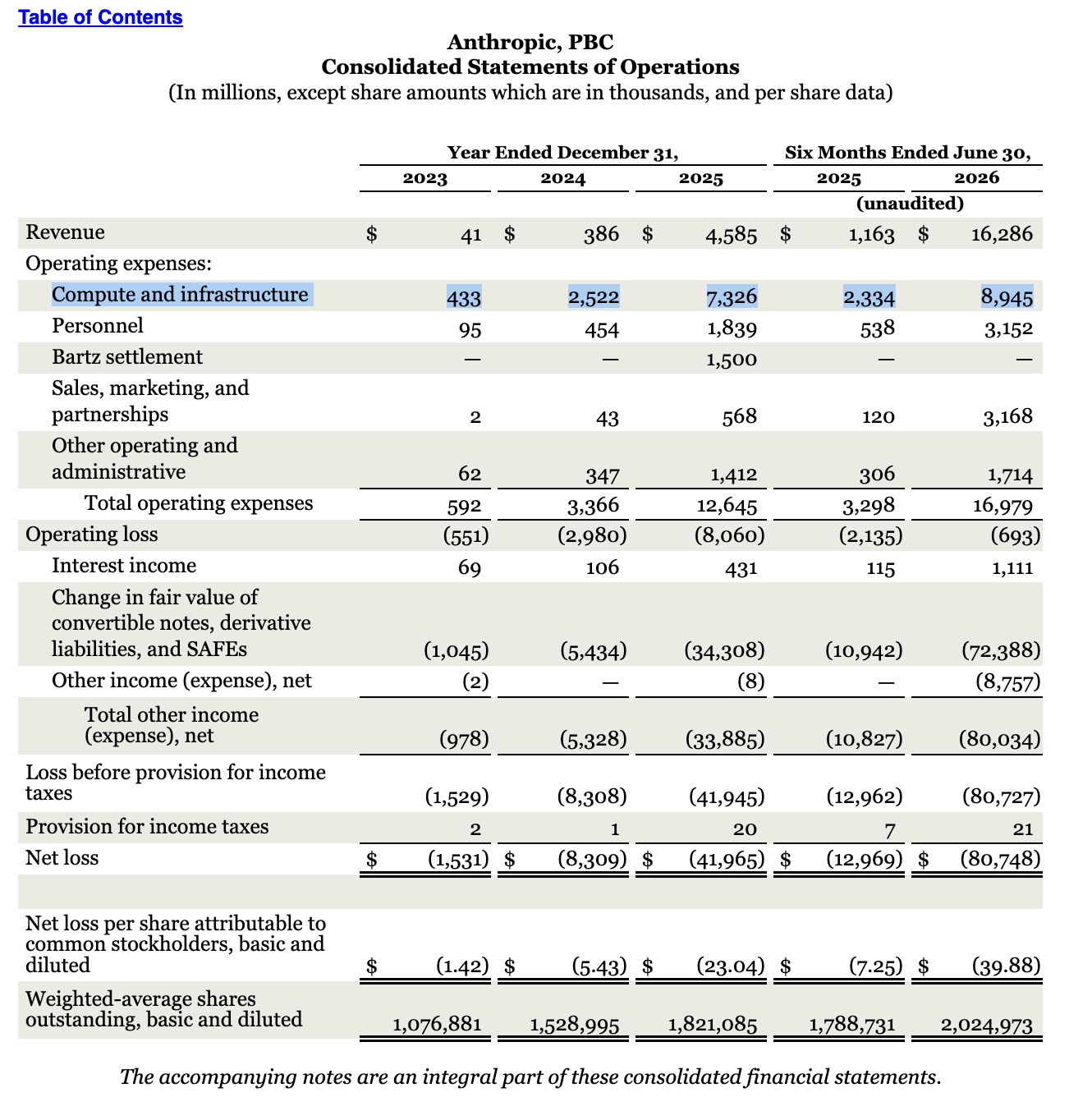
Since this just came out today, it’s basically impossible for us to go through and try to estimate what the real operating and gross margins are. The entire statement is thrown into a blender because of the convertible notes which you could argue belong in the compute/infrastructure expense line (since they basically paid for it via the convertible note). As usual we’re simplifying what happened and haven’t come up with a decent way to measure the real cost of running Anthropic so far.
Summary
We’re in a brave new world at this point. Assuming Anthropic goes out, a lot of white collar professions will shrink over the next 2-3 years. In addition to that, smart people who utilize AI for busy work and have good judgement will end up becoming much richer than years past.
We went from brick and mortar to internet. Which meant no need for upstart capital to pay for a lease or a high traffic building for visibility.
Now we’re entering the Automation era, where you don’t need loads of support staff to operate like you’re a mid sized business. Accounting, follow ups, profiles and general customer service tasks go down by 80-90% with the right prompts.
Talent will get rewarded like never before seen in human history. Great news for anyone who actually tries. Terrible news for people who think the way to get ahead is by schmoozing.
Part 2: Microsoft Cuts - Glimpse of Future
Mega companies like Microsoft have absurd administrative bloat. In addition, they are learning that a lot of their engineers are no longer needed as AI tools + one talented person = no change to performance/production.

Quick Check on Breakdown: MSFT has about 223,000 employees
39.9% in operations, 34.5% in R&D, 19.3% in Sales and Marketing, 6.3% in General & Administrative
From a geographic standpoint about 54.3% USA and 45.7% International
Pour One Out for the Consolidator
This tells us quite a bit on a first glance. Some poor soul (or a team of five) is now in charge of firing every single outsourced person and creating a streamline production that can be done with code.
Essentially, someone is being tapped on the shoulder and given the following mantra: “Go cut all these people and make it automated internally”.
The big carrot at the end is being made redundant. Once the process is streamlined there is nothing else to do beyond double checking the new software based assembly line from that point forward. The optimistic outcome is the person does a stellar job and ends up being a trophy operator for the Company.
Math Way to Look at The 60,000 Headcount
We’ve mentioned that AI is having a tough time justifying itself from a revenue point of view. If you attempt to use it by saying “go find me a biz idea” or “go find a way to generate revenue” or “go find a good stock” it is absolutely horrific. We know this because we test it all the time along with the ads to see what/how AI can best be utilized.
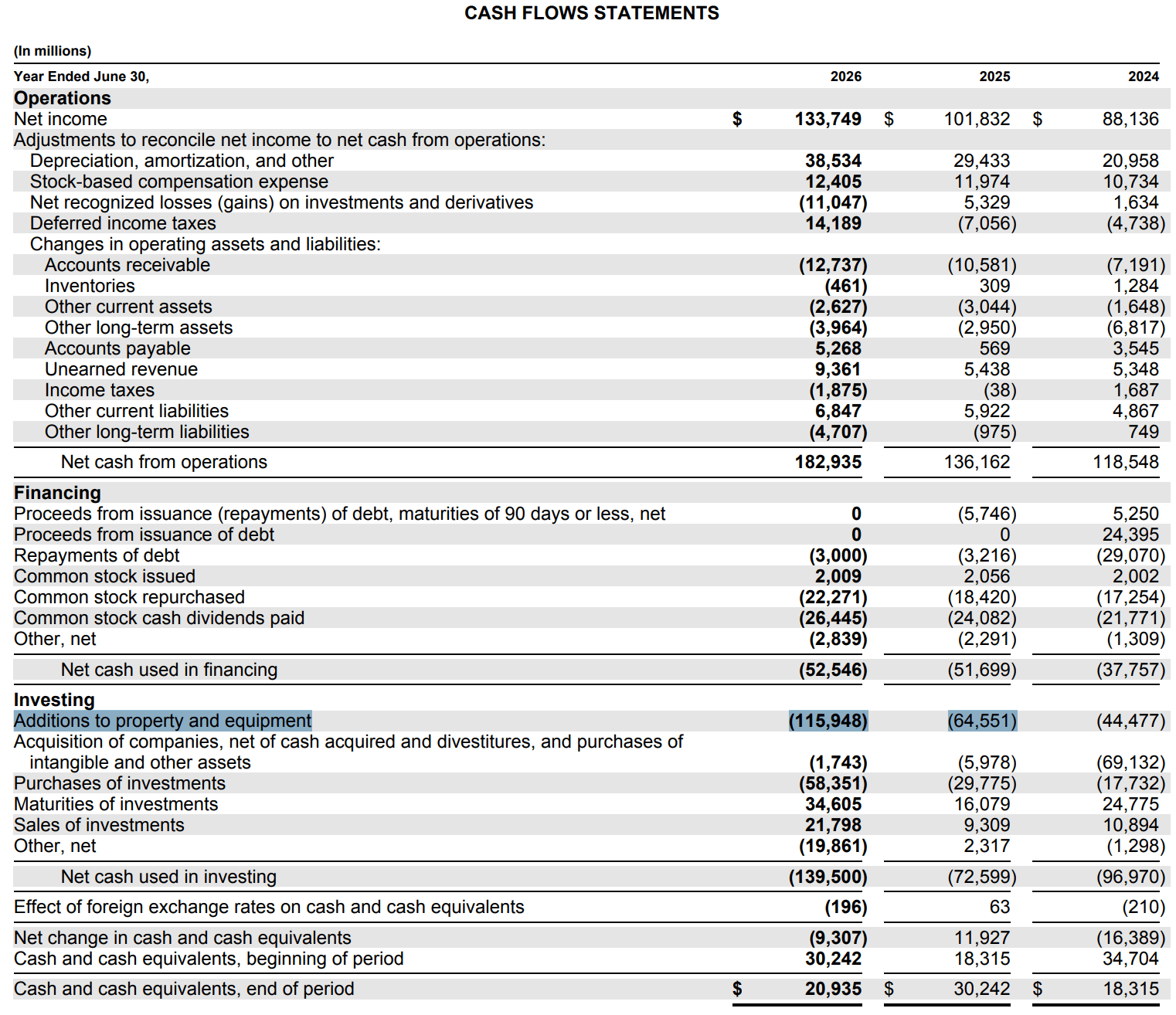
That aside, we can solve for the AI spending by backing into the numbers. At a quick glance CAPEX spend was up $51.3 billion.
Quick Math: Just assume the increase of $51.3B is all AI based spending. They need a number to justify this spend. If headcount reduction is 60,000 it means $855,000 needs to be saved per employee on a on year basis. On a three year basis it would be about $285,000 which is pretty reasonable considering how much engineers get paid. We also have numerous comments suggesting the payout for the package is around 39 weeks + health care benefits + some stock vest benefits.
Keep it simple. Say one year of pay.
This means if they can reduce headcount by 60,000 the payback period is about 3-4 years. They won’t be able to quantify the revenue, however, they can quickly quantify the cost reduction. As usual, humans are just line items in excel within any major organization.
Apply This to Your Own Company
Now that Microsoft is announcing large scale AI layoffs, you can imagine that others now have an easy scape goat. They can go ahead and cut for any reason they like and claim it is due to AI.
In addition to that, it tells you that investors are now looking for a return on all of this AI spending. With interest rates going up and to the right, it doesn’t feel as good to spend billions with a ~10% interest rate vs. ~5% (we know that isn’t exact just proving a point).
Finally, everyone on the paid side knows our general view on MSFT after their recent changes to financials + public statements suggesting that AI needs to slow down.
Side Note on Layoffs
This is an ever green notice for people involved with any sort of severance package. The rule of thumb is simple: take the first major wave payoff
There are a bunch of reasons for this but the main ones are pretty simple:
The payout is likely the highest it’ll be. If there is a second round it is usually less juicy
You have more time to look for a new seat. If you’re at one of the companies that cuts first, you’re not in a much bigger pile of recently laid off people
Don’t overcomplicate it. If you were around during 2001 or the 2008 crash, you know that the first round got the better packages + had a decent shot at landing somewhere new. Even if you land somewhere new only to get cut again, that’s 2 severance packages instead of one watered down severance package. Put the pain upfront.
The 2008 financial crisis was probably the best example. The initial cuts around Q1 were followed by a new set of cuts only a few months later. The people who were thrown into that bucket struggled to get new positions. You were better off getting cut in the first round (despite the first round cut suggesting you were at the bottom of the pack). In simple terms, the smaller companies scooped up the recently laid off people because they viewed it as a way to get access to better talent and wait out the storm. The second round people were stuck floating around because no one was hiring as the market declined further than anyone had anticipated.
TL;DR if you get a severance package notice you want to take it in the vast majority of situations. The offer gets worse and if you’re early in any industry layoff cycle, you can typically find another role at a slightly smaller firm with some effort. Pulling in a full year of income to build your dreams (of leaving to do your own thing). You’re just a line item in excel anyway
On that note looking forward to an exciting week in tech. Expect more AI fears/doomer posts but like everything else, it’ll all work out in the end.
Disclaimer: None of this is to be deemed legal or financial advice of any kind. These are *opinions* written by an anonymous group of Ex-Wall Street Tech Bankers and software engineers who moved into affiliate marketing and e-commerce.
Old Books: Are available by clicking here for paid subs. Don’t support scammers selling our old stuff
How ETH is Staked: Covered (here)
Crypto: The DeFi Team built a full course on crypto that will get you up to speed (Click Here)
Crypto Taxes: We have a suggested Tax Partner and 25% discount code, for information see this post.
Security: Our official views on how to store Crypto correctly (Click Here)
Social Media: Check out our Instagram in case we get banned for lifestyle type stuff. Twitter will be for money