

Welcome Avatar! For those that are older, you know that for a period of time people looked down on blue collar workers vs. white collar. That was the divide between upper-middle/upper class and the middle class. Doctors. Lawyers in Chicago. Bankers. So on and so forth. Today? The game is different. The players are the same but the compensation is not. If you learn anything from this post? Don’t trade time for money.
We’re well aware that bills need to be paid and worst case scenarios exist. Just know trading time for money is a losing proposition long-term. As soon as you can avoid it. Avoid it. Period.
Part 1: Labor is Losing Leverage
Labor Is Easiest to Control
You get a salary or hourly wage. This amount is immediately taxed. Out comes social security, medical, state tax, federal tax, and all the other nickel and dime stuff that is related to your state/zip code. There are no deductions. If you are working from home? You don’t get to deduct the implied rent. You don’t get to deduct your cell phone. You don’t get to deduct your internet. The list goes on and on and on.
Soft Lock-in: With the labor market becoming more competitive you are more locked in. This could be geography (need to be at HQ or a main city) or it could be with your pay/title. Why pay someone a significant raise if they can hire the exact same person tomorrow for the same amount +/- 5%. Better to just pay you a bit less and take the risk you can’t find another seat anyway.
Run the Quick Math Through: Mark tries to scale with a W-2. We’re aware tax rates vary by state but we’re just going to do 33% taxes at all levels to keep it simple. He does not bother with building assets. He is full on world view of the 1980s.
Now we’re going to add that rent, utilities, and other essentials ran at $50K, $70K, $90K then $100K. This means the four net income items are: $16K, $30K, $50K and $100K. If there is any confusion here just take the bullets post tax money then subtract basic expenses that ran at $50K, then $70K, then $90K then $100K.
Mark Income minus Expenses on Post Tax Basis:
1-3 years: $100K = $66K post tax - $50K Expense = $16K Actual
4-7 years: $150K = $100K post tax - $70K Expense $30K Actual
8-13 years: $210K = $140K post tax - $90K Expense = $50K Actual
14-20 years: $300K = $200K post tax - $100K Expense = $100K Actual
Joe comes into the equation. He has similar success to Mark but with a catch, it is all made from a business and he pays a flat 21% tax rate.
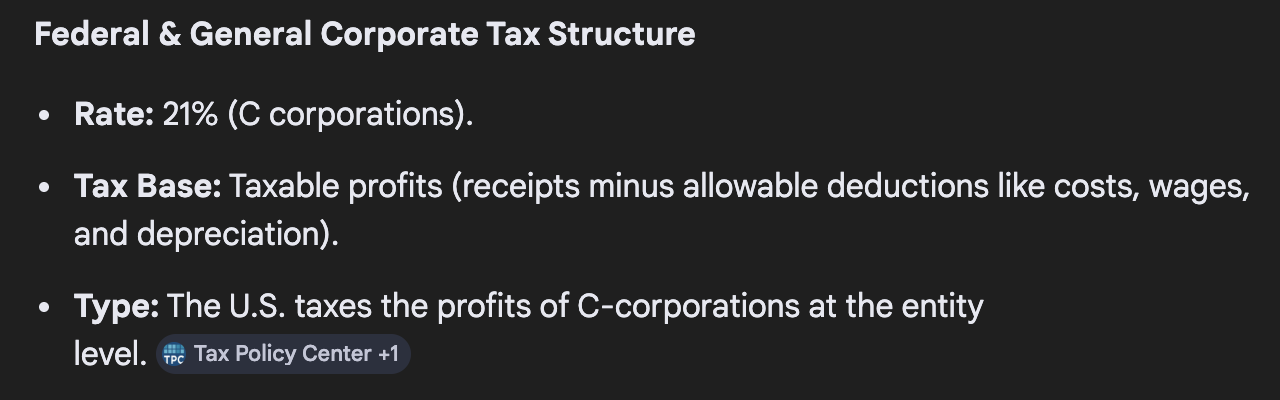
He has $100K, $150K, $210K, $300K but this is before he is able to make all those deductions. If it was real estate it would be depreciation expense, cost segregation etc. If it’s WiFi you’re deducting internet, computers, rent for the home office and anything else you need to run your business. We will assume he can deduct the entire thing so its easy to follow
Joe’s Calculations Are Now:
1-3 years: $100K - $50K = $50K pre-tax - 21% Tax = $39.5K Actual
4-7 years: $150K - $70K = $80K pre-tax - 21% Tax = $63.2K Actual
8-13 years: $210K - $90K = $120K pre-tax - 21% Tax = $94.8K Actual
14-20 years: $300K - $100K = $200K pre-tax - 21% Tax = $158K Actual
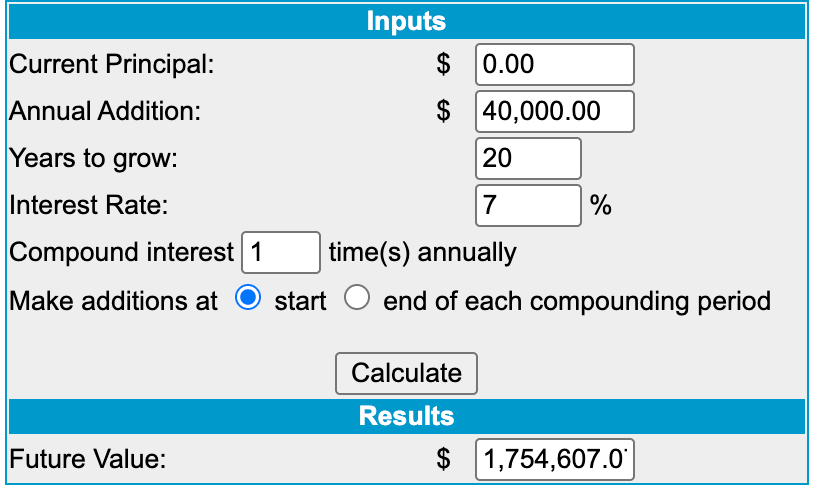
Look at the drastic difference in outcomes. Despite living frugally, Joe was saving more money on a net basis in just four years when compared to Mark at year 13. Absolutely absurd. If you simplistically said “$40,000 is the average difference per year” this is what it looks like compounded over 2 decades.
The difference is four fully paid off houses!!!
If this isn’t inspirational we don’t know what is. Not even Tony Robbins can save someone if they don’t find this to be adrenaline pumping excitement.
Worker Already Down $1.7M and It Gets Worse
But there is more. Joe and Mark are now uncs as the youth would call them. Instead of caring about night clubs, they care more about health clubs and golf trips. The idea of drinking until 2 am at a night club is not exciting. Going out for a steak dinner and waking up for Tee time is much better. Priorities shift.
Only one problem. Joe and Mark are not in the same position. You see, they are both suffering from high stress. One wants to retire, the other one could but doesn’t want to yet. Then an unlucky stoke of luck hits both of them: health event. They can’t perform at full capacity.
Mark: Forced to retire early. He was a golden child employee. He gets a full 1 year severance and full 1 year health coverage and all his stock vests. This nets him about 2 years of income and 1 year of health insurace.
Joe: Well, he has several options: 1) he can hire someone to run the firm at his new lower capacity and 2) he can sell. Joe has a history of friends/family dying a bit earlier than expected. Call it 70. He does the math and says he has about 25 good years left.
He decides to sell. Since the firm is running at about $300,000 in profit with consistent earnings he gets a $1.5M offer and he has to stay on for 3 years at a base salary of $75K in a reduced role. This nets out to roughly $1.7M in income for him.
Math is Math: Joe was already $1.7M ahead and now he gets another $1.7M compared to Marks $600,000. In total Joe is roughly $3,000,000 ahead when they both spend about $100,000 to survive. 30 years of life is the spread.
Limited Scale: Despite giving Mark the benefit of the doubt in (ability to move up the ranks of corporate America), he is still held down by his time commitment. Hard to book vacations. Hard to remain invisible as responsibilities ramp. Hard to envision a way out. Pot committed.
We would pour salt in the wounds and lemon juice in the eyes by pointing out a lack of control typically leads to more stress, worse personal life and worse health outcomes but we’ll go ahead and ignore that for purposes of this post. Mark is already out $3,000,000 anyway.
Labor is Becoming a Widget
Its getting harder and harder to justify higher compensation. AI is making it possible for lower IQ people to operate at the middle. The middle is operating at upper middle levels. The top is laughing since they are using AI to replace the need for the prior two segments entirely
Once you have cheap overseas labor utilizing all of these tools, software/AI is going to reduce grunt work value from $100-$200K a year down to near nothing. Probably in the $50K range at most.
Back to Joe and Mark: Despite earning about the same (not really but lets cope for a second), Joe is able to sell the asset he built. This is the crux of all the issues. When you think about it, the end all be all is control.
By having control you can: 1) decide how the expenses flow, 2) decide when you work and when you don’t, 3) decide if you want to sell the asset, keep it or bring in an operator and 4) you get to track and determine who is a widget and who is adding real value.
Control + judgement. The new name of the game.
Summary
Selling your time means you get paid last. Government gets paid first, then living expense and you take what is left
Asset owners get paid first. Revenue hits owner figures out what can be expensed and how the rest gets paid out. (Dividends, salaries… you get the idea it matters a lot)
People always talk about Gross Salary when you should look at Net. If someone runs a business with $250K and another guy lives in NYC with $300K, you can easily take the $250K person and get them a high net income number ($250K just assumes pre tax income)
There is no limit to business growth, there is a pyramid and pecking order in corporate. Unless you’ve got your degree in nepotism or blackmail, the chances are slim of bypassing the entire game
For the example we assumed the same state for both people. You can fill in the blanks on the ability to move and its impact on cost of living + taxes
By building assets you’re putting yourself into the drivers seat. You control where the car is going. And. At what pace. If you’re above average, this is a dream come true. If you believe in the old 40 year career path… well its “scary”
Control + Judgement. Build these two and you will make it. Not might. Will.
Part 2: Why Assets Continue to Pull Away
Have you ever walked into an organization and said “wow everyone here is necessary and this place is operating flawlessly”. That was a joke. You can laugh now. This never happens.
The reality is that all the AI tools are simultaneously making work easier and making it easier to track who is actually producing. That last part is massive.
People who were politically loved clocking in 1/5th of the work hours? Now being highlighted in an excel sheet and sent to a higher up (politically neutral third party). Gotta produce.
Becomes More Mechanical: At this junction, everyone is looking for an excuse to cut costs. They want to lay people off? Claim its due to AI to appear forward thinking. If they do get a break through? Same result just deeper cuts.
Humans are now being turned into clean line items. Before, you’d only evaluate tools you’re paying for and if those are delivering enough value. If something costs $1,000 a year but you can justify that it makes you $2,000… it’s staying forever.
In the not too distant future. This will be every single person in an organization. Drill down the exact revenue they should be credited, the exact expense and see what the operating profit/margin spits out. Simple as that. If you’re red? You’re gone. If you’re below corporate? Gone sooner than later. If above? You’re going to be left alone. Unbothered. Which is actually the real sign of respect in corporate.
The Asset Earns More While Doing Less: You can see the spiral. If labor has a lot of competition and owners can easily see where to trim? It’s vicious.
Company sees less job openings → they don’t raise incomes/don’t promote as much → new tools allow them to reduce costs → more job applications come in suggesting huge tilt to business owner → repeat the same process again…
This only breaks when the firm gets too greedy and starts cutting people they shouldn’t. It will happen. They will assume a few key people are not valuable. They get cut. Suddenly need them back and now you have an even more expensive problem (have to pay up to get then back).
The reason you’re not seeing that right now? All the pain is located at the entry level. If that is the case, the chances of firing a key employee is near nothing. If you needed an extra admin in a few years, you won’t be paying top dollar. Fire the wrong 1,000x engineer/sales person? Yeah. You’re in for a world of hurt.
Typical Wage-Price Spiral
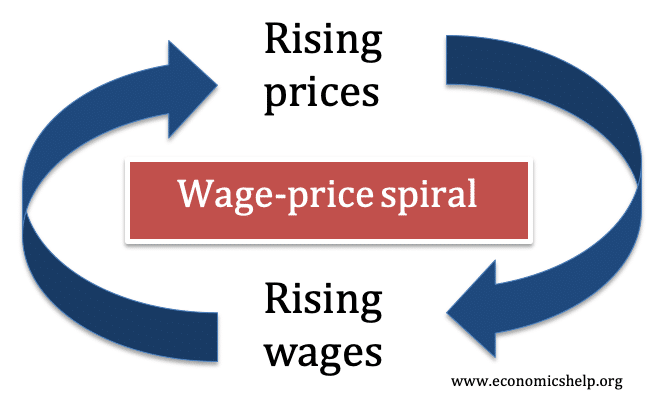
The difference? In 2026 the owners/asset creators can use AI/software to drive down the wages part. They will keep prices flat and drop the wages. This is a great strategy as the consumer will realize they are not paying more. Consumer sticks around for a longer period of time and the competition that gets greedy (raising price + dropping wages) will lose market share.
Summary
AI/Software is handing control and margins to the business owner. A worker is actually forced to learn the tasks to perform better for the company. Think about how absurd that is. No different from the original proliferation of the computer and internet. Suddenly performance expectation went vertical and there was no looking back. This is the same.
Any asset with scale already (could be as boring as Johnson and Johnson) will benefit by getting rid of their entire back-end with a few engineers + cheap subscriptions.
You want to be the one owning more stock or the one making the stock go up with no exposure? Seems like an easy choice but you’d be surprised.
Part 3: Back to Mark and Joe
While it is painfully obvious that Joe is the winner. Not just financially but in terms of quality of life and freedom, the question is “why don’t others do it”
From our experience its really a three things:
They are risk averse. The comment of “don’t know where to start” has been answered well over 100 times on the paid stack along with step by steps on how to find product gaps. For some reason they are more scared of losing $200 on a failed LLC vs. the $200,000 spent on some random college degree
They are older. The older someone is the more likely they are to talk a big game. They will cope and say it isn’t possible or that the numbers are too small initially. Yes $1,000 a month is nothing if you’re in a $500,000/year seat. Think back to when you were 21 though. Would $1,000 be useful? Yep. “Bigly”
Living in the past. People love to do this. Its so common that its basically the backbone of politics. Going “back to the 90s, 80s” when things were “better”. Per usual. It wasn’t better at all. Talent goes to the top and always will
The problem now? Don’t really have a choice. If you’re 20, 30 or even 40, you need to start building up some sort of asset. While E-com/Wifi is what we do/recommend, we’re not against your dreams of building houses or brick and mortar (assuming it is extremely well vetted and you’re convinced it’ll work).
That’s really the message. Before we would write these posts and show the math. People would cope and seethe and move on. Pay their BMW lease and mortgage. Drink. Call it a bad dream.
Today? No longer a dream. Reality. Sink or swim.
Disclaimer: None of this is to be deemed legal or financial advice of any kind. These are *opinions* written by an anonymous group of Ex-Wall Street Tech Bankers and software engineers who moved into affiliate marketing and e-commerce.
Old Books: Are available by clicking here for paid subs. Don’t support scammers selling our old stuff
How ETH is Staked: Covered (here)
Crypto: The DeFi Team built a full course on crypto that will get you up to speed (Click Here)
Crypto Taxes: We have a suggested Tax Partner and 25% discount code, for information see this post.
Security: Our official views on how to store Crypto correctly (Click Here)
Social Media: Check out our Instagram in case we get banned for lifestyle type stuff. Twitter will be for money