

Welcome Avatar! As a quick preview for part of Sunday’s post, one thing we’re noticing is that old P/E and ETF analysis is no longer relevant in 2026. We’ve all watched as the same charts pop up. “20 companies are driving all the returns” or “100s of companies in the S&P are down”. None of this addresses the main issue: Tech Removes Headcount Without Impacting Revenue.
Since that is the case, how accurate is the E in the P/E ratio?
Part 1: Example of Items That Can’t Be Used
Forward Returns on a P/E Basis
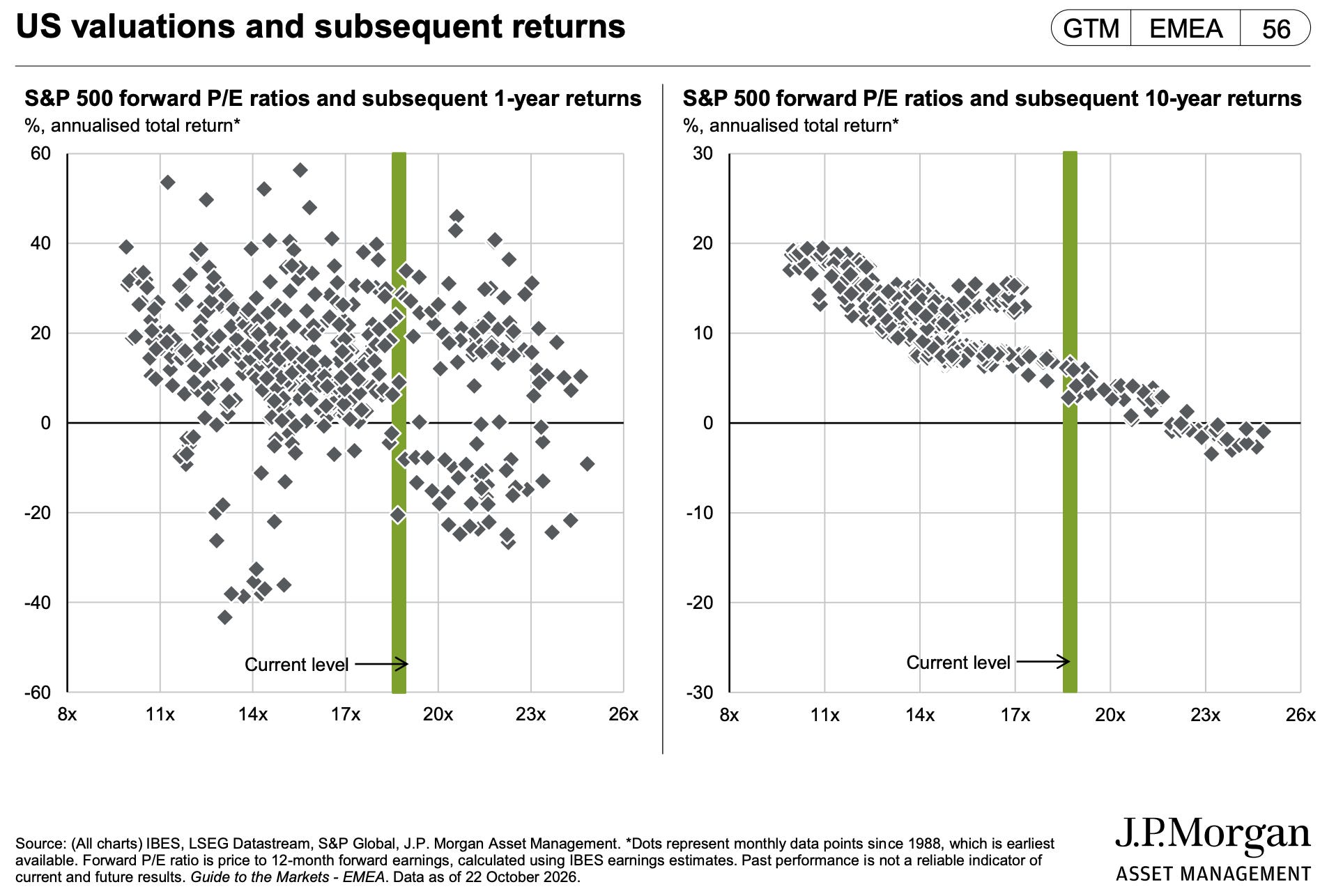
This is a popular chart used by the bond vs. equity crowd. It doesn’t show the comparable interest rates however it does show a decent pattern. If P/E ratio goes up past ~23x, it doesn’t lead to good stock returns over a 10-year period.
Two Problems With This
#1 Whose P/E Ratio?
The first one is pretty obvious. The P/E ratio is based on a NTM forward estimate made by a bunch of Wall Street analysts. In 2026, everyone should understand that a Wall Street Analyst will copy paste the Company guidance and move on. This is because the real model on the sell-side is to get access to management via roadshows and ideally build a “positive relationship” which is just code for “help bankers get on debt/equity deals”
For fun we’ll go ahead and say that this has always been the case. The P/E ratios have always been mediocre and current set is no different.
#2 Why Look at the S&P
This is the bigger question. If you look at history, the logic was that “small caps go up and down more than large caps”. Essentially, the logic was that smaller companies were always higher beta than large caps.
In 2026, this is a bit more challenging. Since AI is largely a cost reducing measure (for now), the real beneficiary is the mega cap companies. If you are running a firm with billions in General and Administrative costs… those can be taken to near zero with AI. There is just no way you’re paying someone to look up flights or copy paste PDF numbers into an excel sheet. Exception to the Rule Being assistants to the top 10-20 people at Company (more or less)
How To Address This in Your Own Portfolio
Ignore Mid-Caps: Back in the 2010s it made sense to look at mid-caps since they historically traded like a Beta on the market in general. As of 2026? Not really relevant. The logical train of thought is as follows:
Large Caps will benefit from cutting costs, growing revenue and seeing higher profit margins. META is a decent example of what happened after COVID in terms of headcount and revenue. While they cut costs, their only goal is to retain their current customer base. Margins expand rapidly
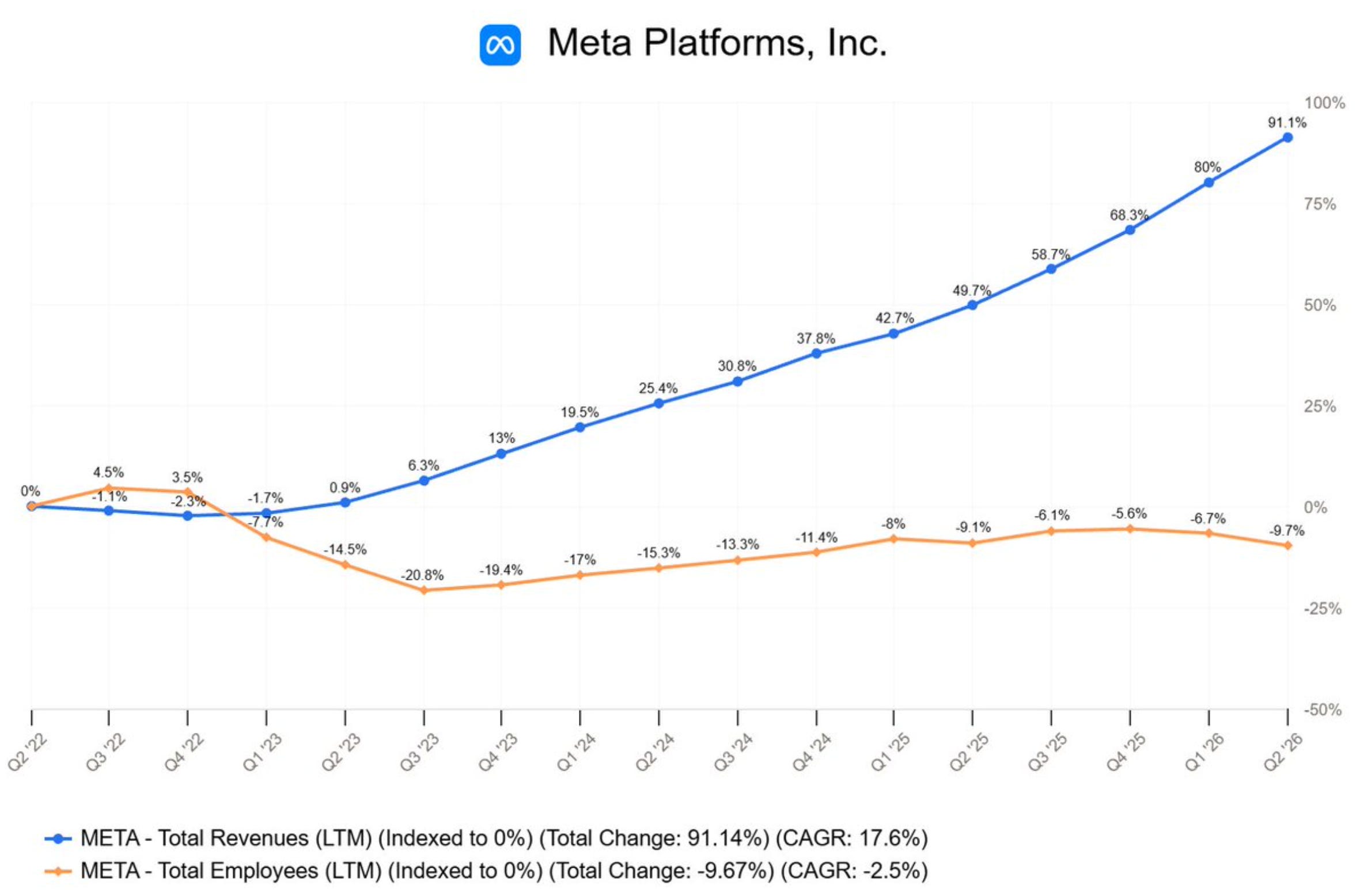
Mid-Cap companies (on aggregate), will have to find ways to gain higher margin customers. They are not big enough to mass layoff and have it move the operating margin line by a meaningful amount. The larger companies can simply mass fire a lot of back office and buy time with the current revenue streams they already have (once again not great to be stuck in the middle)
Small-Companies. More and more people will turn to basic entrepreneurship because the incentives are all there. You can start a biz with $5,000 vs. $50,000+ back in the 2000s. You can give an experience similar to a large company for all basic tasks (email follow up, surveys, etc.). Few clicks and you’re indistinguishable from a mid-sized company. Not comparable to large ones because no massive brand recognition on day one
How To Restructure
We’re probably biased since we’ve learned over the years we’re better at dealing with two things: 1) high tech and 2) ultra large markets. Not particularly good (at all) with the mid-cap stuff.
That said, with rates as high as they are, we think it makes more sense to focus all your efforts on the large companies or innovative high-tech.
Look at the forward P/E ratio and adjust all of those numbers by a wide margin. The largest companies in the world will not need huge G&A costs and analysts have unlikely factored in a secular declining headcount with revenues flat to up. IE. the P/E ratio is wrong
If you are looking at a P/E ratio for Company ABC, go ahead and look at their corporate debt as well. At this point, the rates have to go up massively. Then ask what type of return do you need to justify the equity risk. If you think the stock will go up 8% but the debt is priced at 8%… You instantly see the issue. Makes no sense at all
Blended Large Cap Debt = New Hurdle Rate. Before you decide to throw money into any investment, a blended average return of the big cap tech debt is the new hurdle rate
Summary
Before looking at historical relationships between any stock and the current valuation, be sure to triple check (quadruple check) how that Earnings is being calculated. There is simply no way that operating expenses need to be as high as they are (as of today) with AI displacing all of the busy work, data gathering and presentation/spreadsheet work.
We already gave out a decent way to decide if your company is doing well (here), and part of Sunday we’ll bring up some clean examples of easy OPEX reduction (large caps).
Part 2: Security Max Fear
Lots of people are in full panic mode because of potential security issues with AI. The funny part about all of this is that crypto is taking the brunt of the fear. All those one time passcode emails/text messages are causing anxiety.
It is pretty easy to see the real target (if security is actually breakable): Apple iOS or the Entire Financial System
We’ll Use Apple in This Case: If someone had a real super intelligence code that could break into anything, they would go straight for Apple (information payload). This makes a lot more sense than anything else. You would instantly have access to: 1) government level information, 2) every single hot wallet, 3) the device that receives the 2FA code and 4) everything else stored on an iOS device - ever.
A good example of this was the 2023 BlastPass hack when spyware was successfully installed.
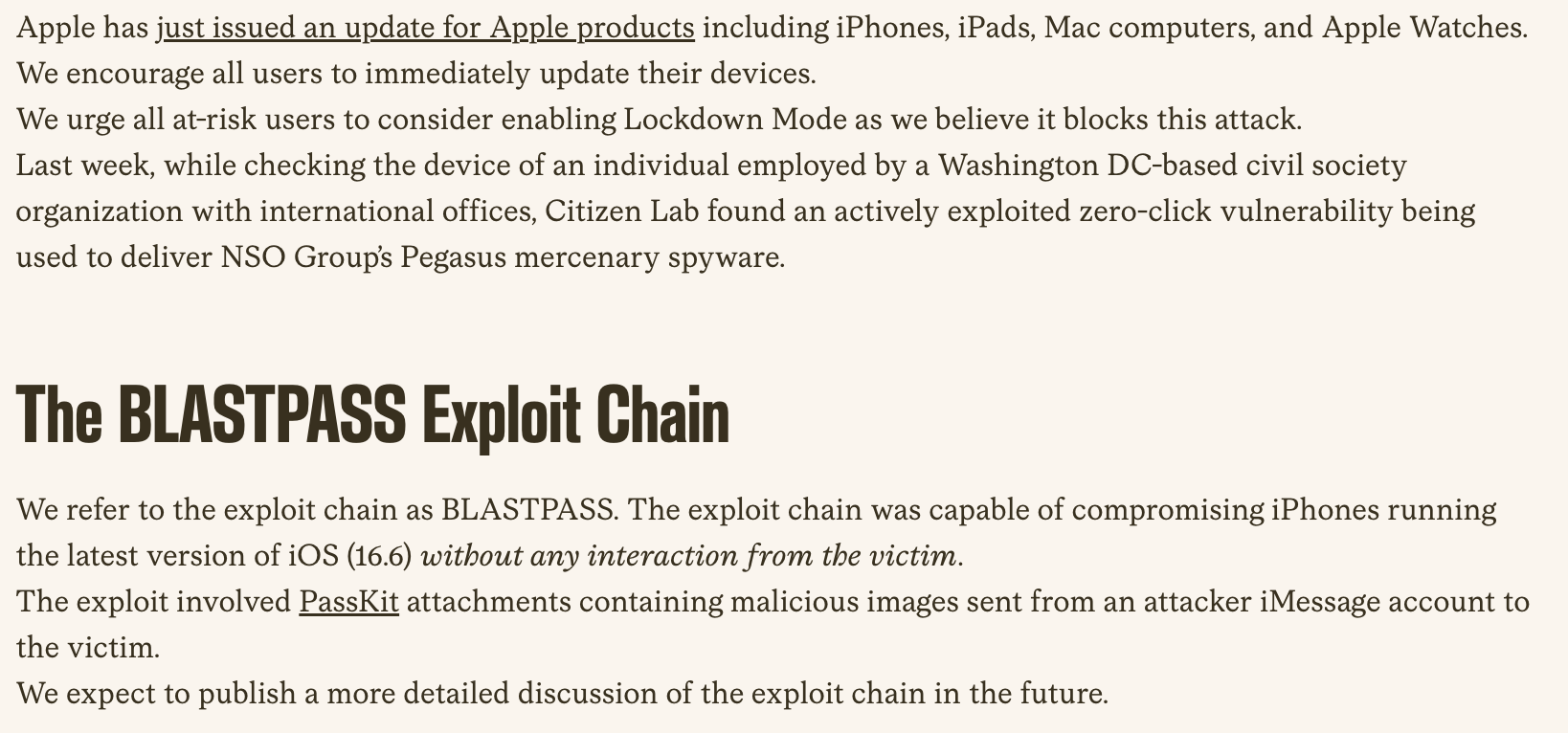
While we’re sure everyone will argue that this was tiny and not comparable it still proves the point. Even with full control of the hardware and software, if there is a true super intelligence (all knowing and all powerful) getting into every single iOS device is a lot more valuable than Bitcoin or any other Crypto currency for that matter.
Hundreds of trillions of value by having covert control/access to all information on iOS devices.
Before anyone clicks sell on their Apple stock, we’re more than happy to say we’re owners of it and won’t be selling. No need to try to read between the lines. The point is two fold: 1) fears are massively overblown related to security around the world and 2) crypto is not on the list of a super intelligence to go after
Reminder of the Basics
Anything sensitive should be done in the physical realm if possible. Anyone who loads their seed phrase to an iOS device (or any digital/computer device) is crazy to us. You should have a physical piece of paper (or metal engraved writing) to represent your main assets.
Small sums of money and immaterial things (such as daily spending) do not need to be hidden.
On that note we’ll see you all Sunday when we comb through the large caps to find companies that could quickly reduce their opex. If they do the earnings numbers are heavily understated
Disclaimer: None of this is to be deemed legal or financial advice of any kind. These are *opinions* written by an anonymous group of Ex-Wall Street Tech Bankers and software engineers who moved into affiliate marketing and e-commerce.
Old Books: Are available by clicking here for paid subs. Don’t support scammers selling our old stuff
How ETH is Staked: Covered (here)
Crypto: The DeFi Team built a full course on crypto that will get you up to speed (Click Here)
Crypto Taxes: We have a suggested Tax Partner and 25% discount code, for information see this post.
Security: Our official views on how to store Crypto correctly (Click Here)
Social Media: Check out our Instagram in case we get banned for lifestyle type stuff. Twitter will be for money