

Welcome Avatar! If you’ve read us for a long time, you know that we’ve gone through various life arcs/paths already. One of the things we try to do is remain even keel. Your college days will end, the party years will end, the athleticism will fade, your looks will fade, your money will go up a ton, you might exit and feel bored, so on and so forth.
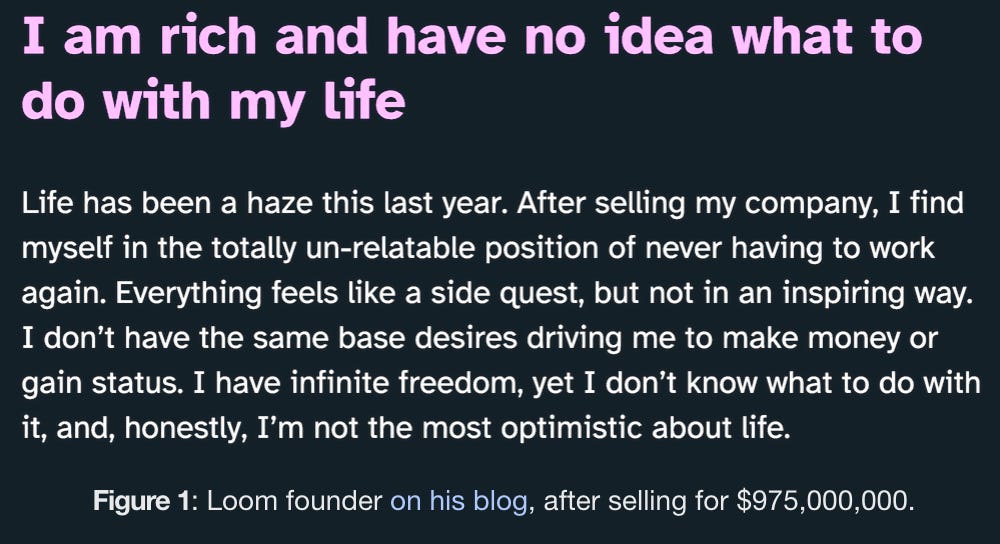
We’re going to address this topic now as some of you are going through something similar ***today*** and many will go through this over the next 3-5 years or so. While it’s unlikely that the majority exit for some obscene number like $975 million, there is a huge cliff when you have a paid off home + $3-5M liquid to your name
Autist Note: Yes. We seriously believe that the typical person who follows the right path can get to ~$3-5M and a paid off home. We also believe ***literally*** anyone can become a millionaire (just work a ton of jobs and live cheap). Therefore the rough “you tried and didn’t get crazy lucky” line is around $4M + paid off home in a nice area. If you get to $10M, $50M, $100M+ by the time you’re middle age then congrats. It’s certainly possible. Just know that you need a bit of talent or luck on your side to get to mid 8-figures.
Preamble: You Will Have At Least One Identity Crisis
In fact, we’d wager that you have more than one. Typical triggers are company sale, career loss, health event, becoming a parent, kids leaving the house, selling a company, retiring etc. Anything with heavy changes to daily life.
We’ve stated that practically everyone you meet has survived at least a couple catastrophic events. Could be psychological (personal life - divorce etc.), could be financial (bankruptcy, etc.), could be health related (bad luck in a car accident).
It is bad decorum to complain about your past as an adult. Chances are high that the person you’re talking to has had a similar disaster.
Examples of Events That Lead to Crisis
If you are forward thinking, you’ll avoid the easy identity crisis events with planning. Not hard to figure out that you won’t be in night clubs at 45. Not hard to figure out that your vertical leap will be non-existent later in life. Not hard to figure out that you won’t have a banner year financially in a linear fashion from 20 to 60. So on and so forth.
Like everything in life the first step is to avoid the easy pitfalls.
Easy to Avoid Example: College athletes struggle with identity post graduation. The majority are forced to simply go into the corporate world. Since they were living off of local fame for the past 8 years (high school star, college campus big shot) when they lose all of it… Their identity gets crushed. Every year people care less and less about your past accomplishments and no one will take you seriously by the time you’re a few years out of college.
This is pretty easy to get ahead of. Unless it is painfully obvious that you’ll be a highly paid professional athlete, you gear all of your college efforts into the “next phase” of life which is work and eventually a business.
Crisis averted with basic planning.
Harder Example: You sell your first Company. If you were making $150,000 a year and suddenly sell a small company for $5M, this can create a huge problem. Even if you tried to have varying interests (athletics, religion, pets/kids, etc.) that windfall is going to mess with your entire identity. You can’t build anything meaningful with low effort (at least not your first rodeo). Your dedicated time to this was well above 70% and even with the guardrails, you will quickly slip into “is this it”
So far, we haven’t seen a single person avoid this process.
Every single successful person we know has at least a few months of pure chaos. Spending a bit too much, buying stuff they don’t need and general hedonistic tendencies that spill out due to the sudden influx of money + free time.
The best way to fix that one is simple. Start building another project. The only benefit to selling an asset is that you’ll have free time. If your next build ends up selling for $2M instead of $4M it doesn’t matter. You already won the game early and the new project is just an outlet for pent up energy and cognitive skills/abilities.
The easiest way to trick your brain is by saying “if you don’t build something new, you might fall behind and lose everything!” This works because it is partially true. If you don’t keep your mind sharp, you are playing with fire.
Autist Note: Please do not assume that because you have money, that will make the next idea easier. It is completely unrelated. Seriously. You have massive knowledge and capabilities. That is why it is easier. If you started your last business with $25K, you definitely don’t need more than $50K for the next one (exception to the rule building rockets and craziness like Musk)
Objective is to Dampen the Blow
As you can see, we’re already predicting failure. Not just for you. For everyone (yes we went through that already!)
You will have a least one and more likely two events where your identity takes a huge hit. This post is designed to help you avoid the obvious ones and come up with a few tips and tricks to recover faster when Mike Tyson shows up with that KO punch.
When you’re at your peak, the only place to go is down. Flatten the slope and you’ll find yourself on a new peak in the future.
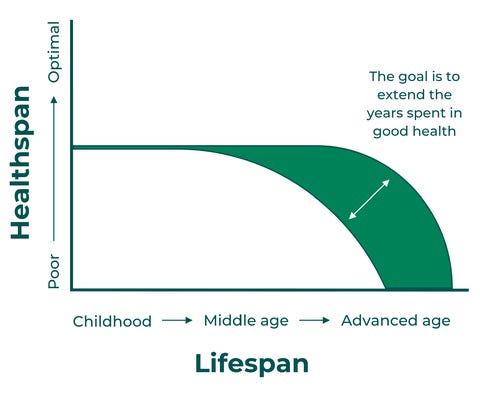
Manage Your Identity Like You Plan to Manage Health. Expanding the good years vs. taking the elevator down.
Part 1: Finding Your Areas of Identity Weakness
A large portion of life comes down to self awareness. If you develop the ability to see yourself from a third person lens, you’ll quickly see your own faults. As an example our own faults are painfully obvious: low empathy, non-existent emotions and blunt/cynical writing style (luckily that last part doesn’t bleed into social if you master “smile, nod and agree”). We doubt anyone here would be foolish enough to ask us “my GF just broke up with me how do I recover” type stuff.
You should be able to make a similar assessment. To help with that process here are some good examples of potential identity pitfalls:
Attractive Person: Typically hits women more than men. Does apply to men though. Biology comes for us all. If you’re in this camp, you need to rapidly use the social leverage. If an attractive person fails to maximize the open doors, the next step is “the world got mean”. Not quite, they were just reliant on borrowed time
Athlete: Already quasi-covered since the majority will at least know someone who fell off after being the College star. It happens at the professional level as well. The only difference is that the professional can typically pivot into training camps/gyms etc. Unless you’re playing Golf, best to have a pivot planned in advance for when you will top out
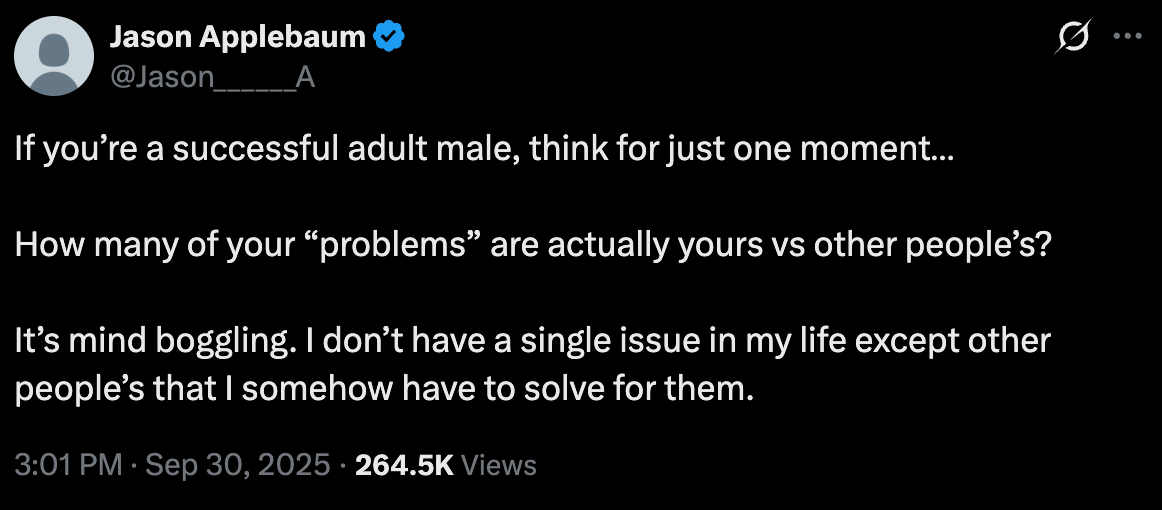
Rich Guy: People forget. We’ll always say Wealth > Health. This helps us avoid the entire “richest man in the world” game. Tons of people chase digits on a screen for no reason. They risk $10M to chase $30M only to go back to $1M. It’s all due to an identity crisis about being “the rich guy”. The bigger problem? Even if you do make it big, you realize life isn’t that much different
Quick test if this is you, the following post will live rent free in your head for the next year:
“Only a Parent”: Actually a dangerous one. If your entire ID is solely around being a parent, when the kids leave you’re left with a big black hole. You can make your family the #1 priority but it can’t be the only priority. This also helps you avoid the classic trust fund baby/lazy kid outcome
Founder/Originator: Eventually you are pushed out. You learn that everyone is replaceable even the creator himself! Pretty tough pill to swallow if you don’t have any other immediate start up ideas
Artists: Those celebrities go crazy for a reason. Have a banner year, then suddenly lose momentum, fall out of the limelight and next thing you know it’s alcohol, drugs etc. Most of these types have limited roots/grounding since they are used to people constantly asking them for favors. After grabbing that big win, better to *already* know the next steps: investor, real estate, venture funding etc.
Extremely Smart Person: This usually just leads to a combination of arrogance and resentment. Neither outcome is really good. After another decade passes, cognitive abilities will decline and the bill shows up (typically over leveraged bets and public displays of anger - Jesse Livermore (combo of smart + rich guy syndrome - source)
If you recognize yourself in any of these seven options, we suggest a slow pivot. It is unlikely that someone turns it around in 24 hours. Life isn’t Disney. It is completely reasonable to start diversifying your identity over the course of a year or two.
A healthier example is to map out the likely identity crisis events and have a marker to slowly flip it. Athletes should simply pencil in age 35 as the rough time to get off the “1 rep max, I still got it personal best” train. Typically leads to a lifelong lingering injury. Instead it should be “I’ll use age based bench marks vs. personal records and reduce training days”
VO2 Max, Grip Strength, Heart Rate, Body Weight Reps + Bike Sprints are a Good Start
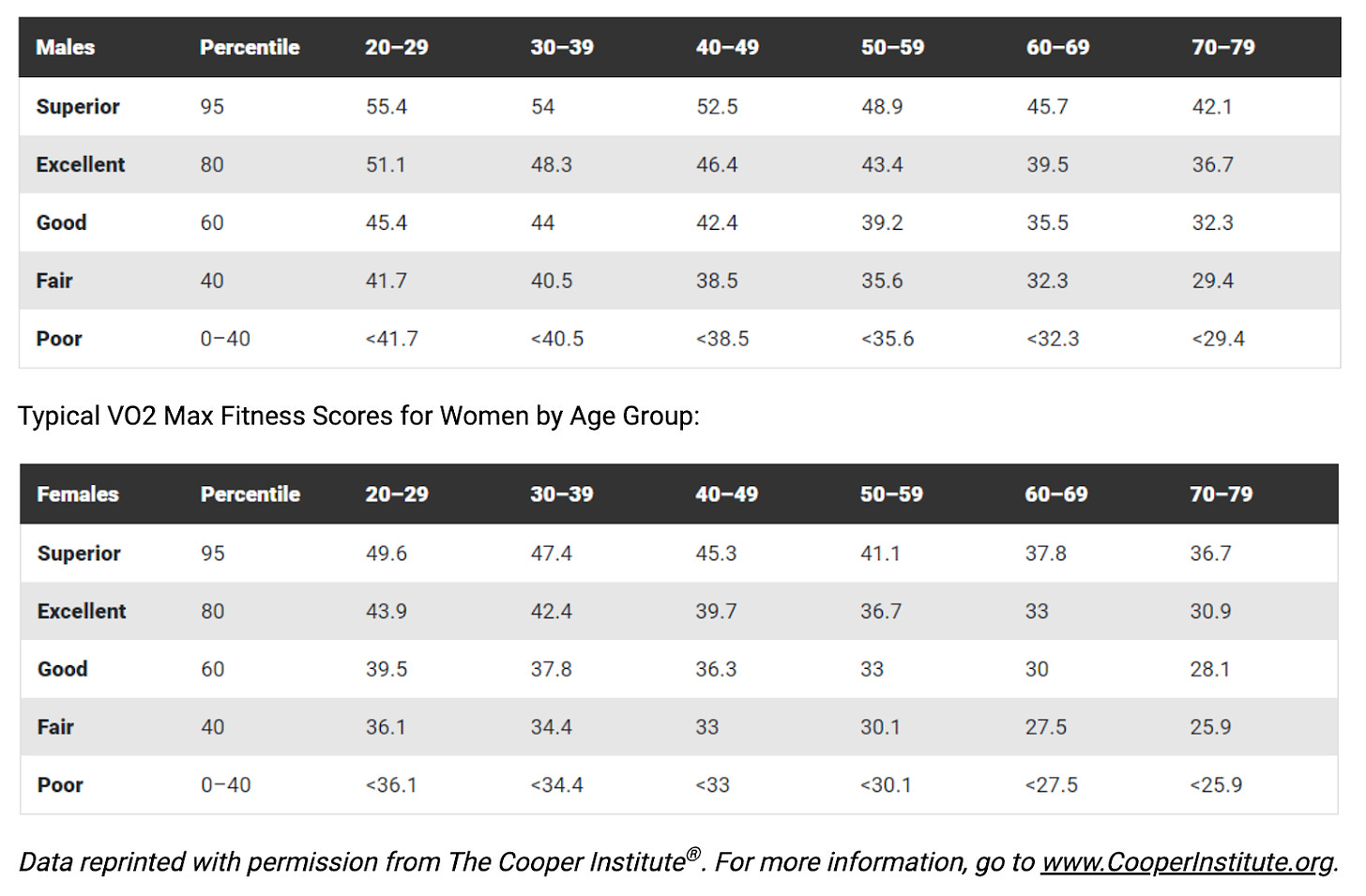
Since that is an easy and obvious one, a simple solution is to bucket your life into four clear categories. You will always have one category that is dominant “parent” “founder” “artist” “Chasing Money” etc. You simply need three other sub-categories to avoid a collapse when a major event occurs in the dominant category.
Duty: This is where the majority of your time goes. If you’re younger it is making money and building that business. When you’re older it typically shifts to parent and confidant. Your main priority is either a family or sending the elevator back down at a government/local level
Capability: Your second identity should be related to the capability you are building. It could be fitness, a new industry or a new company. The common theme is solving a new problem that you have not tackled before. For those in the know we have actually done this here on the paid stack going through various phases of trying something new (currently learning the entire home building process from scratch!). This is by design. It is a capability that is useful and doesn’t interfere with primary duties.
One Game: Every year video games are knocked as a waste of time. Fair enough. You still need at least one entertainment hobby to avoid the classic "dull rich guy” stereotype. Surfing, hiking, music, pottery, animal shelters, volunteer work at a local event… so on and so forth. While a large chunk of charity work = tax write offs and some sort of scam, there is a lot of real value being created as well. Be part of that section
Creative: While you don’t want to end up as a street artist pulling in $100 a day for a living, there is a lot to be said about creativity. Especially now with everyone trying to copy paste the latest trend over and over again. Art, music, writing, doesn’t matter. Choose one and get good at it. There is a 100% chance it will bleed into the other three categories by osmosis
Tally It Up
Ask yourself how you would operate if one of them went away completely. This is tough to imagine because it could typically crumble the identity of the person. As an example an artist who works a minimum wage job to barely pay the bills would have a much bigger psychological hit if they could no longer make art vs. losing their minimum wage job.
Once you have this we suggest diversifying the main identity.
Example: If you identify as a business owner and builder, the second you get your payout you should learn investing. This is exactly what we did and preach here (consistent messaging!). This is because operators have much shorter shelf lives versus investors. Hedge Funds, Mutual Funds, Family Offices are all run by people in their 50s, 60s, 70s and even 80s. Nowadays it is much harder to run a large company at age 60.
Second Example: If you identify as a parent, you want to have a slow adjustment process for when the kids become more sentient. They won’t be living with you forever and you already know the big markers: 1) going to elementary school, 2) competing high school where specialization begins and 3) college/workforce/vocational school etc.
You want to identify less and less as a “parent only” every 5 years or so.
Third Example: If you identify as being the ultra smart person in some subject, you absolutely must attempt new things every year. The problem with large success + IQ is that your human interactions become incredibly imbalanced. Extremely unhealthy set up as you eventually get displaced by the next generation of talent. If you’re never in a position to ask for help/guidance the feeling of arrogance/resentment will ratchet up in a straight line.
Part 2: Map Out the Likely Events
Now that you understand why this happens, its wise to map out major life events.
Around middle age there is a HUGE chance that you will be cut from a high paying W-2. This is simply how it is. Any high paying W-2 (Tech, Wall St. etc.) has a thin up or out culture.
By around 35 you will notice material physical declines no matter how much you rely on next generation hormone replacement therapy. Have a plan for where you’ll place those extra hours that used to go to the gym (Golf, learning an instrument - anything)
If you decide to have kids there will be a large identity change around when they are born, when they go to school, when they specialize and when they leave. Four major events!
Side Note: Large chunk of you will have at least one exit. Once you do, please don’t be psyopped into thinking it is harder than having kids. You will have more than enough time to run a small business (or more) unless you plan on having 10-20 of them. This makes logical sense as small business owners… typically have kids! If it was “impossible” to do so, they would sell and quit. They don’t though
Death of parents. Another ugly topic but think about the probabilities. Don’t assume that they will live past 80. If there is something you’ll regret, go ahead and fix it today (not tomorrow). Parents to kids and parents to pets = one directional unconditional love. When you lose that, it’ll likely cause a lot of volatility if you can’t say they lived a great and full life
Sudden Empty Nest. Probably the worst outcome. Just assume that everyone you talk to on a daily basis is gone tomorrow. Do you have any sort of game plan to get back on your feet? If not it’s something to consider. Standard phrase we’ve used “hope for the best, prepare for the worst”
We would wager that the majority do not have plans for all five of these items. 90%+ of people have an fragile identity gap that needs umbrella insurance (so to speak). If you walked through all of this and said “I have a way of getting back to baseline that doesn’t involve self destruction” you’re golden
Healthy Transitions
Again. No matter what you will get clipped at least 1-2 times by a real identity crisis. It will happen to everyone. That said, here is a decent framework for how to transition identities based on age band/life events.
Early age you should be the high performing all out working/building. This is about 80-90% of your identity. Going out Thursday and Saturday is basically your max social life. Risk is high that identity takes a hit with every set back. However, you’re the founder/originator by default. If you don’t try this you end up 1) regretting it for the rest of your life or 2) end up being pushed into the bottom of the K-shape anyway. Easy call
Next transition is typically health. Seems a bit counterintuitive but along the way to making it, you will notice you are not as sharp as you once were. Now you’re still in founder/operator role but you’re probably able to get max results with about 65% of your identity. This opens up a new lane to maximize your physical potential and mental capabilities to play the slow decline game.
Transition to Parent is the most common. Again. If you don’t plan to have kids skip this step. Typically after feeling financially set and in good shape, that is goldilocks for extending your bloodline. For a period of time, you will likely be operating at 45% owner/operator 45% parent 10% health
Transition to Capital Allocator + Parent. This is where a lot of the identity crisis occurs. If you’re plugged in, you will recognize that you don’t have the ability to keep pace vs yourself at 30. Take as many PEDs as you like, it isn’t comparing. Luckily, the out is becoming a capital allocator as you look at your spreadsheet “If I find ways to drive slightly higher returns it’ll basically be the same as starting a tiny Company”. This your queue to pivot, typically 50% parent, 15% capital allocator, 25% operator and 10% health and fitness
Transition to Legacy + capital allocation. If you make it this far, you’re now at the home stretch where most of your effort is just capital allocation and legacy. Could be charities, could be local government, could be some grand parenting, etc
Directionally, all of this is the healthiest way to plan out your identity changes. Least this is what we’ve seen. We’re somewhere around bullet 3 and four. We use this website for capital allocation transition + hobby artistic release + legacy. Pretty good combination of three in one. If we can’t even explain why we’re buying something then it’s probably a garbage investment anyway.
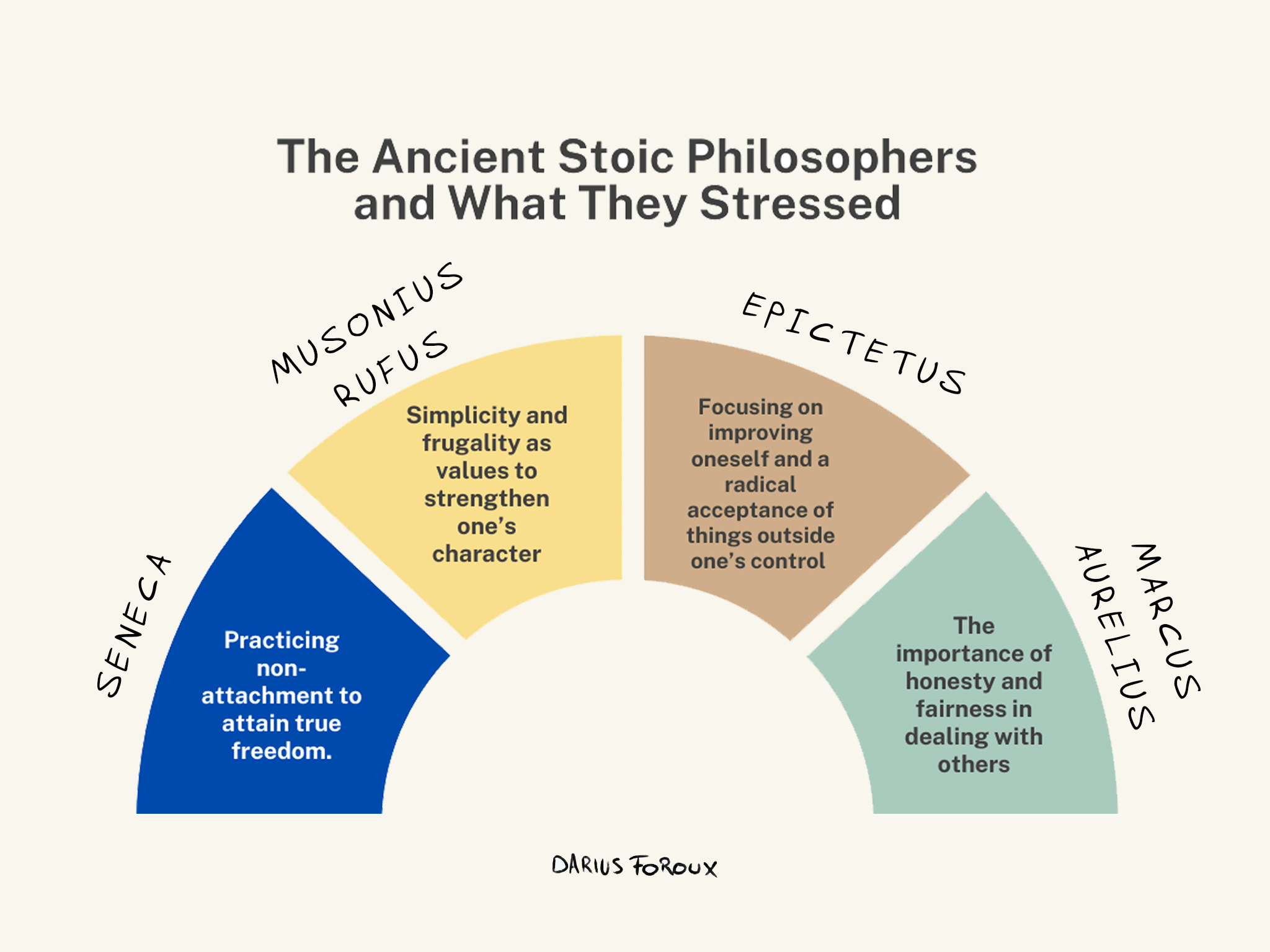
Part 3: Adopt Some Basic Stoicism
This line of thinking gets mixed results. Some argue that stoicism attracts sociopaths who feel no emotion. Others believe it is healthy for emotional regulation. We’re somewhere in the middle.
Unhealthy Stoicism: Your dog gets struck by lighting in a freak accident and dies. You don’t get mad, you don’t get sad, you feel nothing and just throw your hands up and say “whelp freak accident nothing i could do”. Probably a good sign to see a psychiatrist
Healthy Stoicism: Same event happens you’re immediately mad, frustrated, sad or a combination. Instead of taking out this frustration out on your friends/family, you process it by yourself over a few days. This is what healthy stoicism is. You didn’t do the standard “lash out on other people” who had nothing to do with the event in the first place. The vast majority of people have poor emotional processing and if they got in a fight with their wife/husband that day, they’ll take it out on the entire office/team etc.
If you want a rough benchmark more of the “fairness in dealing with others”, a little bit of “don’t panic over things you can’t control” and NONE of the non-attachment + frugality stuff. The last two leads to some serious psychological issues if you don’t have any connection with anyone/anything and live like a monk.
Why This Helps
Adopting a little bit of this framework will help you accept and process the natural identity hits you’ll take. You will not forget the day you suddenly lost your “it” power.
One day you’ll wake up and suddenly that vertical jump of yours is gone
One day you’ll wake up and suddenly you’e the “old guy” in Vegas
One day you’ll wake up and the kids have no interest in sleeping in your bed or playing tag, they actually prefer to do be out of your line of sight
One day you’ll wake up and your contact list that was 40-50 people deep will be thin at about 5 real personal life connections
All of this is normal and planning for the identity shift will give you much more utility out of life. Which is the goal. Dying knowing that you’ve maxed out every ounce of utility that you could find (or close to it)
Summary
You guessed it.
We’re predicting a general identity crisis in the USA which is why we’re posting this now.
As tech continues to ramp up, the people who tied their identities to clocking in and clocking out will be in for a rough adjustment period.
The majority will find that career = rented identity. Not owned identity. No badge. No title. No weekly catch up meetings. No bi-weekly paycheck for excel work that can be done by Claude.
Then what?
The answer is they are forced to follow the same playbook we’ve had out for a decade. Building a niche asset. Investing in the choke points. Constantly testing demand for new trends. Investing in “You, Inc.” the only company where you’re the 100% owner. And. Making the process repeatable (finding another trend riding it).
Disclaimer: None of this is to be deemed legal or financial advice of any kind. These are *opinions* written by an anonymous group of Ex-Wall Street Tech Bankers and software engineers who moved into affiliate marketing and e-commerce.
Old Books: Are available by clicking here for paid subs. Don’t support scammers selling our old stuff
How ETH is Staked: Covered (here)
Crypto: The DeFi Team built a full course on crypto that will get you up to speed (Click Here)
Crypto Taxes: We have a suggested Tax Partner and 25% discount code, for information see this post.
Security: Our official views on how to store Crypto correctly (Click Here)
Social Media: Check out our Instagram in case we get banned for lifestyle type stuff. Twitter will be for money