

Since we’re in a crypto bear market, everyone returns to the same talking points they did in 2022. “Bitcoin dead?” No. “Cypto over?” No. The better question is how do they attract the marginal buyer?
What you’re really looking for is a *reason* to add to the crypto market (or any market). Currently, with AI and SpaceX, it makes it hard to get that attention.
Speculative/Hyped markets are not driven by fundamentals: attention and flows determine the price direction.
You can see this in various sizes by looking at the past 10 years. Crypto hype, the marijuana hype, the electric car hype, social media hype and now we have AI hype (we’re sure we missed a few but you get the point). In 2026, the marginal buyer is chasing anything that can be labeled as AI or AI beneficiary.
While multiple markets can move up at one time, the mania market is usually one per year. When you’re not the shiniest object in the room, the marginal buyer moves on until given a compelling reason to rotate.
Part 1: Mania Creates a Liquidity Vacuum
In 2026, the main question is “how much AI exposure do we have”. That’s the primary question amongst hedge funds/mutual funds. They have to decide what they are going to do with OpenAI (S-1 Filed) /Anthropic (S-1 Filed)/SpaceX (Thursday Evening Pricing). Since the market caps are so high, it will actually move the returns when you look at weighted portfolios (mutual funds have to decide if they will own the market weight - say 0.5% or up/down from there). We don’t even want to know the number of Portfolio Managers who were fired for being underweight tech the last 15 years or so!
Since these three companies alone will add up to $3-4 Trillion, being wrong is actually costly. It isn’t a throwaway small position. They have to decide exactly how much they will own and why. Their clients will certainly ask at year end.
Why This Matters
Once you realize that markets are more about emotions than PE valuations, you’ll remember one of the famous investment papers called “All That Glitters” (source). The paper basically says: 1) people follow crowds/herds, 2) high trading volume drags in buyers, 3) media coverage and 4) extreme price movements.
Simple Overview of What Causes Herding/Crowds
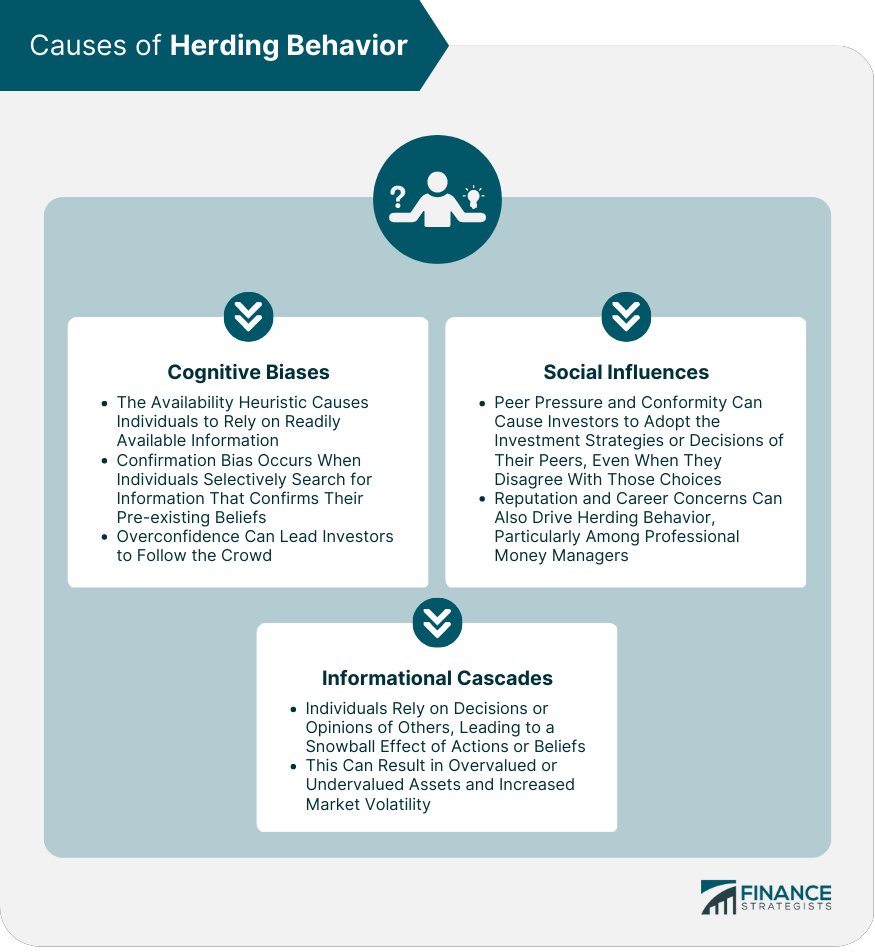
As you can imagine all of those four things lead to underperformance. For the typical person who just started investing you should be selling when you feel good and you should be buying when you think an asset is officially dead. Will serve you a lot better than 100s of finance textbooks.
Zoom Out On This: If we’re in an AI mania, this means everything else should be up more than it is (non-AI stocks). Said differently, it changes the fund flows for every single asset class. At the institutional level it probably only impacts tech. At the retail level, it impacts everything since no one has a “tech only” mandate. They can buy whatever they like and if it’s AI they will not be buying any other industry.
Even More Important, Has Happened Many Times Before
The best comparison is always going to be the 1990s Tech bubble. Not because tech stocks went to wild valuations, but because it dragged in every single investor with access to a stock account.
It ticked off all of the major 4 markers of a Liquidity Vacuum. Despite being a small percentage of the total stock market (leading up to peak valuations), the trading volume was massive. This meant: 1) herd, 2) volume, 3) price movement and 4) media. All at once.
If you want to create a parallel, you should track the trading volume of SpaceX/Anthropic/OpenAI and any other AI/AI related names. See how large the trading volume is vs. market cap. If trading volume is 2x higher than it should be, then you’re looking at market wide attention. If you see trading volume in excess of the actual market cap of the company? Extremely high chance you’re in bubble/mania territory.
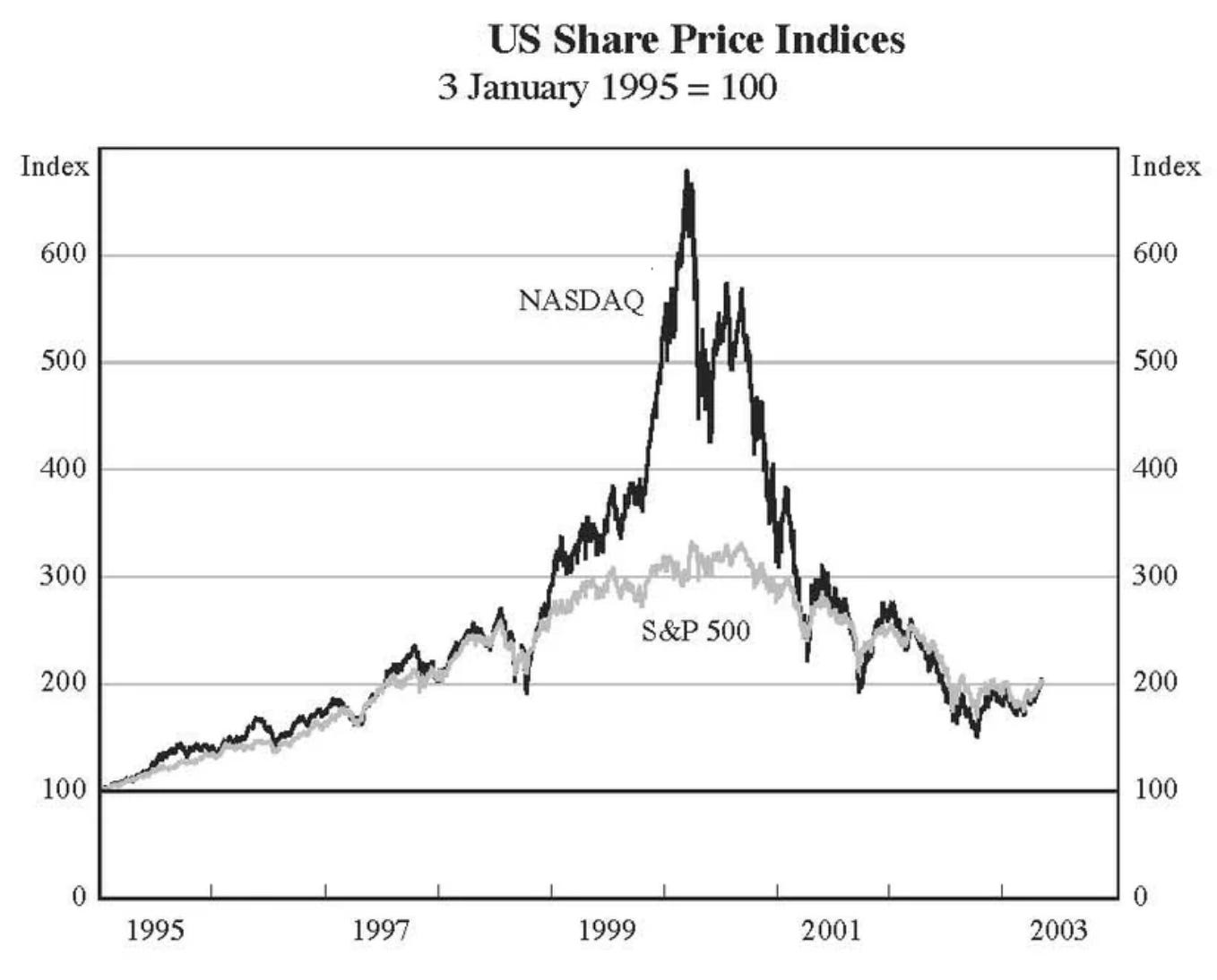
As you can see, as people leave the hyped asset, the market absorbs those sells (they have to invest in something else). Causes the broader index to remain at ATHs even as the entire sector falls apart. Important note, 2001 was 9/11 and other macro issues beyond the bubble pop.
Simplified Conclusion
If you keep it simple like this, during periods where there is a large narrative forming, you should assume that a chunk of people will sell. This is pretty much a lock because SpaceX/Anthropic/OpenAI employees are actual people. They go out and buy houses, diversify their investments and look around for new places to park money (*after* they get a clean exit via IPO).
For research purposes, if you use the Tech bubble as an example, practically everything was a better investment for a couple of years post 2001. We all know that Tech eventually ran to absurd numbers again, but there is a lull where you can buy other things beyond the AI/AI related stocks.
Snapshot of Returns after the Bubble Popped 2002 - 2007 and comparison to NASDAQ
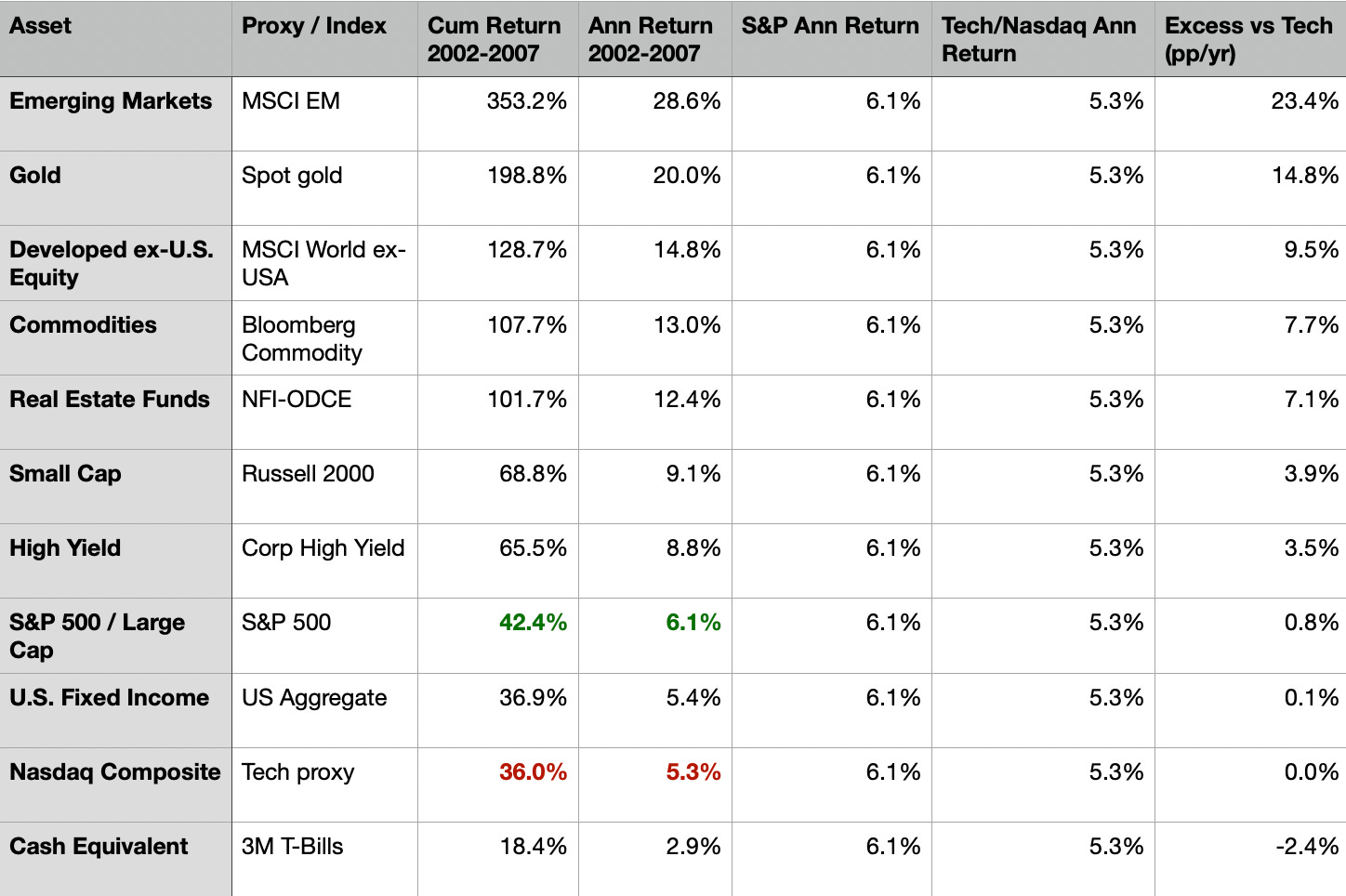
The only wild part is that Cash/fixed income has practically never been a great investment. Unless you look at pure recessions (2008) or market down turn years, the idea of holding cash/bonds long-term isn’t great. Unless you’re in your 60s, you’re better off just shoving money into anything else (Real estate, stocks, commodities etc.). This is because one of the other markets will go through a bull market and you’ll outperform the low returns of AAA fixed income.
Part 2: Secular Assets Are Not Dead
We know. We’re in the standard bear and were fortunate enough to notice the breakdown back in November. That said, the goal is always looking to the future.
We can now tie in crypto.
If you look at the prior table, you can see that every single asset class did better. When a narrative flips, the bubble becomes the funding. We’ll say that again. The bubble asset becomes the funding.
Big Picture: It actually makes a lot of logical sense to see a real estate run up after the Tech Bubble. While the laws were looser, the psychology seems to line up. If you were handed life changing money today, what’s the first thing you would buy? A house. That’s right. We’re sure there is an exception to the rule. However the vast majority would buy a forever home (90% of people).
The tech bubble created a lot of instant millionaires. Horror stories are made of people who sold nothing. However. A large chunk of people did leave with millions and decided to park a chunk into homes.
Now Move to AI/SpaceX/AI Related Hype: Whenever we get a standard correction, you should then think “what will these people buy”
From here, you can decide where they will go. Is the newly minted deca-millionaire going to buy silver and gold bars? Are they going to buy t-bills? Are they going to buy Crypto? Are they going to buy commodities? So on and so forth.
Instead of worrying about the latest ChatBot, start asking yourself “what will SpaceX/Anthropic/OpenAI employees buy”.
Read that carefully! Not what you would do. You are not them. Put yourself in the shoes of the employee. Map out their personalities. Map out their interests. Map out their risk tolerance and personalities. Now you’ve got a decent answer.
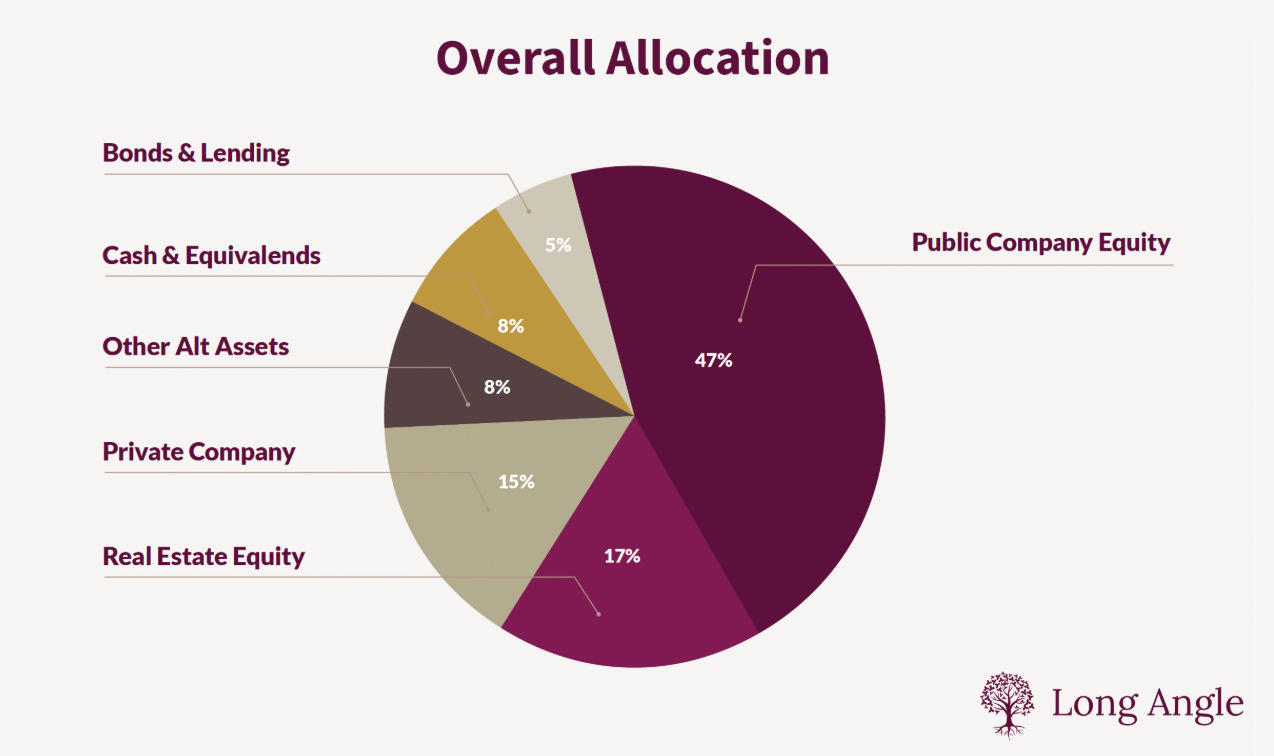
As a Starting Point This is a Rough Mix for HNWI (note this does not filter for tech related HNWI. This includes everyone including 60 years olds who don’t use computers much)
Don’t Let Envy Get in The Way Of Profits: Most of our writing is all about trying to stay ahead of the curve. We don’t claim 100% hit rates and we don’t try to dump everything into 100x gains. There is a nice middle ground where you can stay ahead by following incentives.
If you let envy get in the way “all those lucky AI guys”, you’re only playing yourself. Those minted deca-millionaires will invest their money. You just need to put your trade in first.
You have a few months!
Disclaimer: None of this is to be deemed legal or financial advice of any kind. These are *opinions* written by an anonymous group of Ex-Wall Street Tech Bankers and software engineers who moved into affiliate marketing and e-commerce.
Old Books: Are available by clicking here for paid subs. Don’t support scammers selling our old stuff
How ETH is Staked: Covered (here)
Crypto: The DeFi Team built a full course on crypto that will get you up to speed (Click Here)
Crypto Taxes: We have a suggested Tax Partner and 25% discount code, for information see this post.
Security: Our official views on how to store Crypto correctly (Click Here)
Social Media: Check out our Instagram in case we get banned for lifestyle type stuff. Twitter will be for money