

Welcome Avatar! If you’ve looked at any market recently, you’ll realize that prices are up, up and up. Even though Warsh attempted to cool animal spirits, it didn’t work. What we got was more up movement. And. Printing money again.
“Issuing short term debt” just means … Printing money.
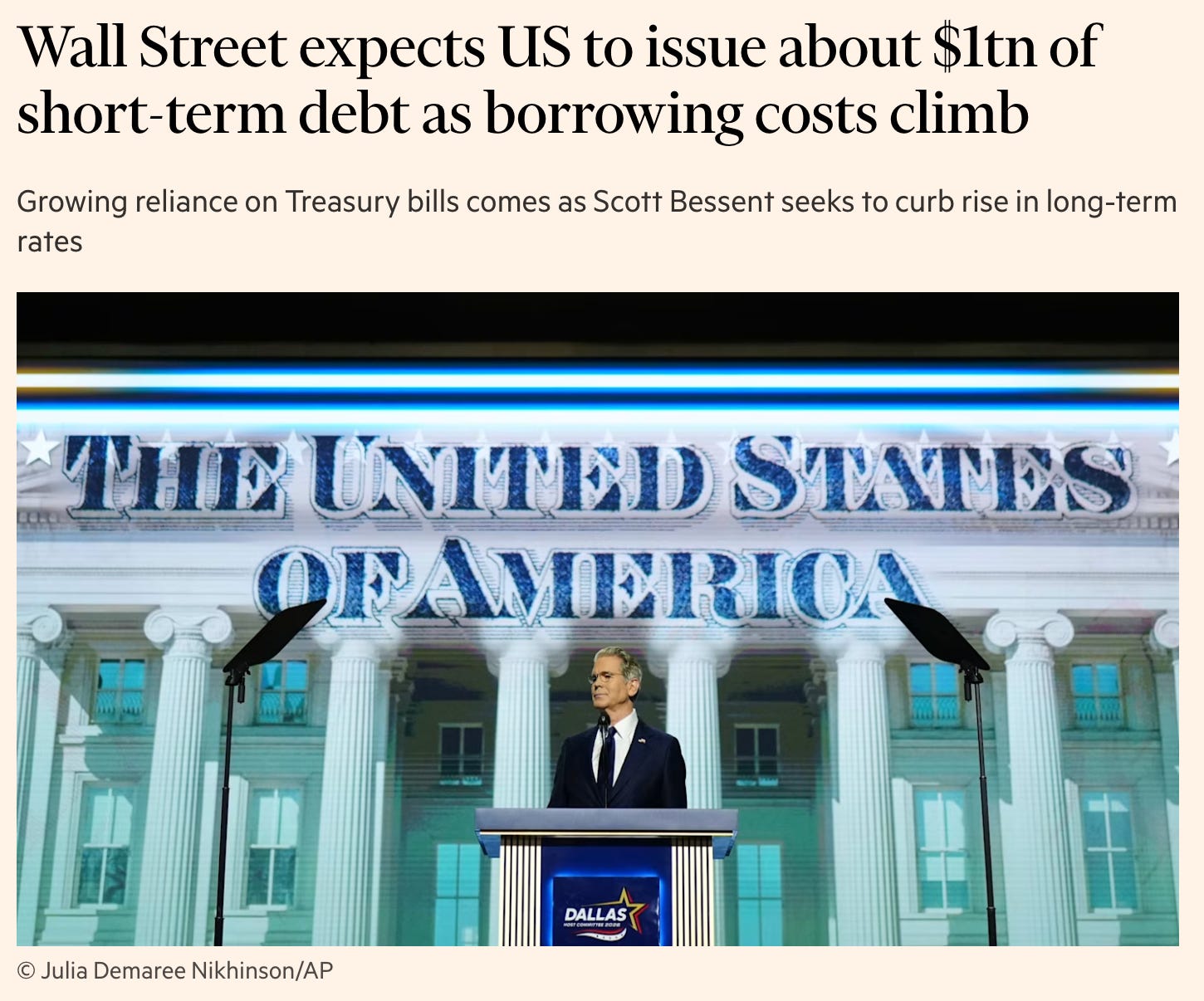
At this point, our working theory is that the Government has decided to give up on the debt issue entirely. Hindsight is 20/20 but Musk’s meltdown was likely a signal in the noise. A guy who survived bankruptcy many times was kindly shown the door when it came to fixing the budget/spending/debt issue.
This means a few things: 1) it isn’t politically tenable to raise taxes or cut spending and 2) they have a general plan to inflate GDP at a faster rate than the debt. This is the goal. Like anything related to politicians/government, it is unlikely going to work (but they will try).
Quick Math Behind Financial Repression
If a government has a ton of debt. The typical assumption is that you’ll increase revenue (taxes) and try to cut spending (use the cost saving to pay debt down). Since neither of these are politically liked (job losses/higher taxes all but guarantee societal push back), there is a third option.
Increase GDP faster than the debt can grow.
Quick Math on Nominal GDP Number to Beat:
Debt vs. GDP in the USA is about 125%. We’ll just call it $40T (Debt)/$32T (GDP). This is a good proxy for what is actually happening
In 2025 we added $2.17T in debt and in 2026 another $2.45T (so far)
Keep it simple and just say we will add about $2.4T per year, this year being worse due to war costs/middle east
Add that number to the debt and we get $42.4/$40 = 6.0%.
Remember that number. The goal is for the government to increase nominal GDP by 6.0%. If it can sustain nominal GDP growth of 6.0%, the debt burden is decreasing (Nominal GDP = Inflation + Stated GDP)
Current Set Up Lines Up:
Total debt growing at roughly 6%.
Nominal GDP of… 8.0% (3.5%+4.5% = 8%)
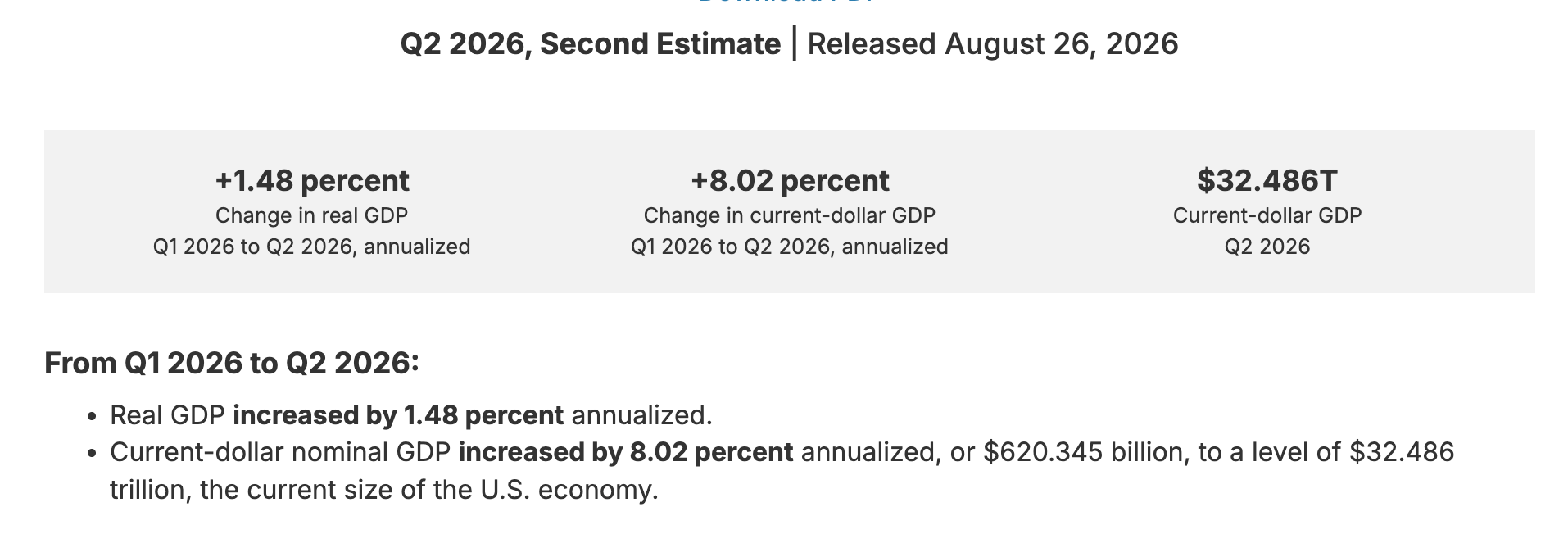
Compound All of It: Since we don’t know what they will print for the next 10 years, we’re just going to assume it is constant. We’ve got 6% debt growth and 8% GDP growth. What happens after a decade?
$40T (1.06^10) Divided by $32T (1.08^10) = $71.6T/$69T = 103% debt to GDP vs. 125%
Summary
The USA has basically given up on paying down the debt (along with a whole host of other countries). Instead of pretending it is possible by suggesting tax hikes and cutting government spending, the plan is to get GDP to outpace the debt growth.
If successful, the US can silently kick the can down the road for an absurd amount of time. In addition to that, it is now in their interest to control the yield curve to keep rates below their nominal GDP numbers.
What This Means for You
If you’ve been reading us for a long time you already know the main characteristics and plans: 1) spin up a internet native business, 2) invest in tech/crypto and 3) use the W-2 as the funding to slowly escape and keep the lights on. Quit when you’re making about 2x W-2 net income from the business (always exceptions to the rule, this is the general guideline)
While that hasn’t changed, the interesting thing that has changed? You can’t trust anything from stated inflation and real interest rates anymore.
This is pretty severe to be blunt about it. If the narrative is that we will grow out of debt, what they are really saying is “we are incentivized to lie about inflation numbers and control the yield curve”
Calculate a New Hurdle Rate
In typical financial text books you’ll see something like this.
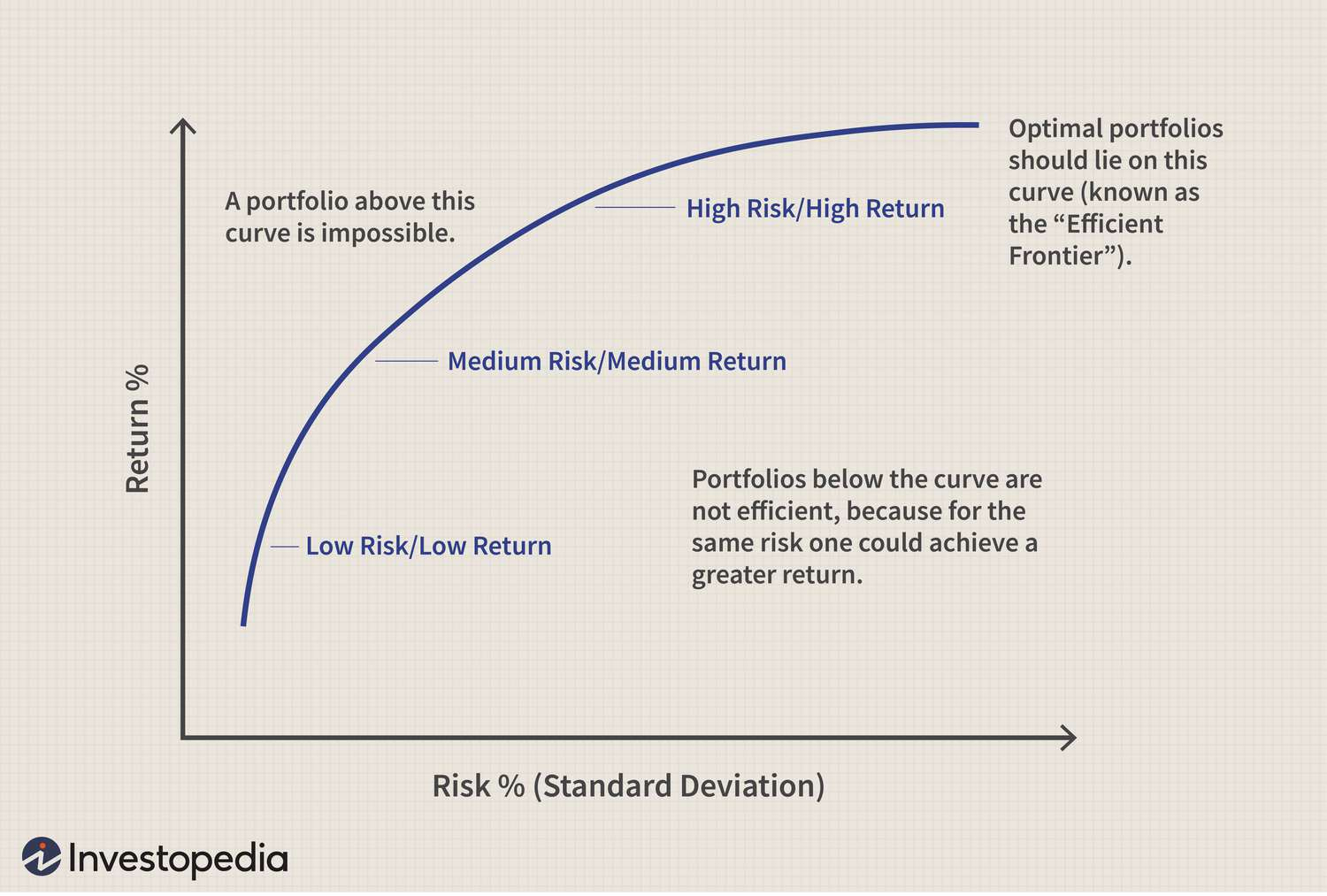
The idea that you can get a positive return with no risk/low risk is no longer a real scenario. The reality is that the risk free rate is at best matching inflation. If you don’t need the money for multiple years, the risk free rate (treasuries) have no real value to you.
Note: this does not mean markets will have zero corrections forever. Rather, it means that a 5-year holding period or so, chances are extremely slim that you’ll be happy sitting in any government issued bond/t-bill (beyond a standard emergency fund).
New Hurdle Rate: Depending on who you are, you should calculate a new hurdle rate based on a combination of inflation + GDP. If you want the easiest way to do it, do not invest in anything that you think loses to Nominal GDP. In an alternative scenario, you should take total National Debt growth + 2%.
This is a pretty decent way to create the new long-term return needed to move up the socioeconomic ladder.
Lets say that nominal GDP normalizes at around 7% (3% inflation + 4% GDP growth). On the other side of the ledger the national debt grows at say 4%. This would mean your new hurdle is around 6-7% depending on which methodology you use (Nominal GDP at 7% or debt + 2% would be 6%)
What Asset Class is the New Proxy
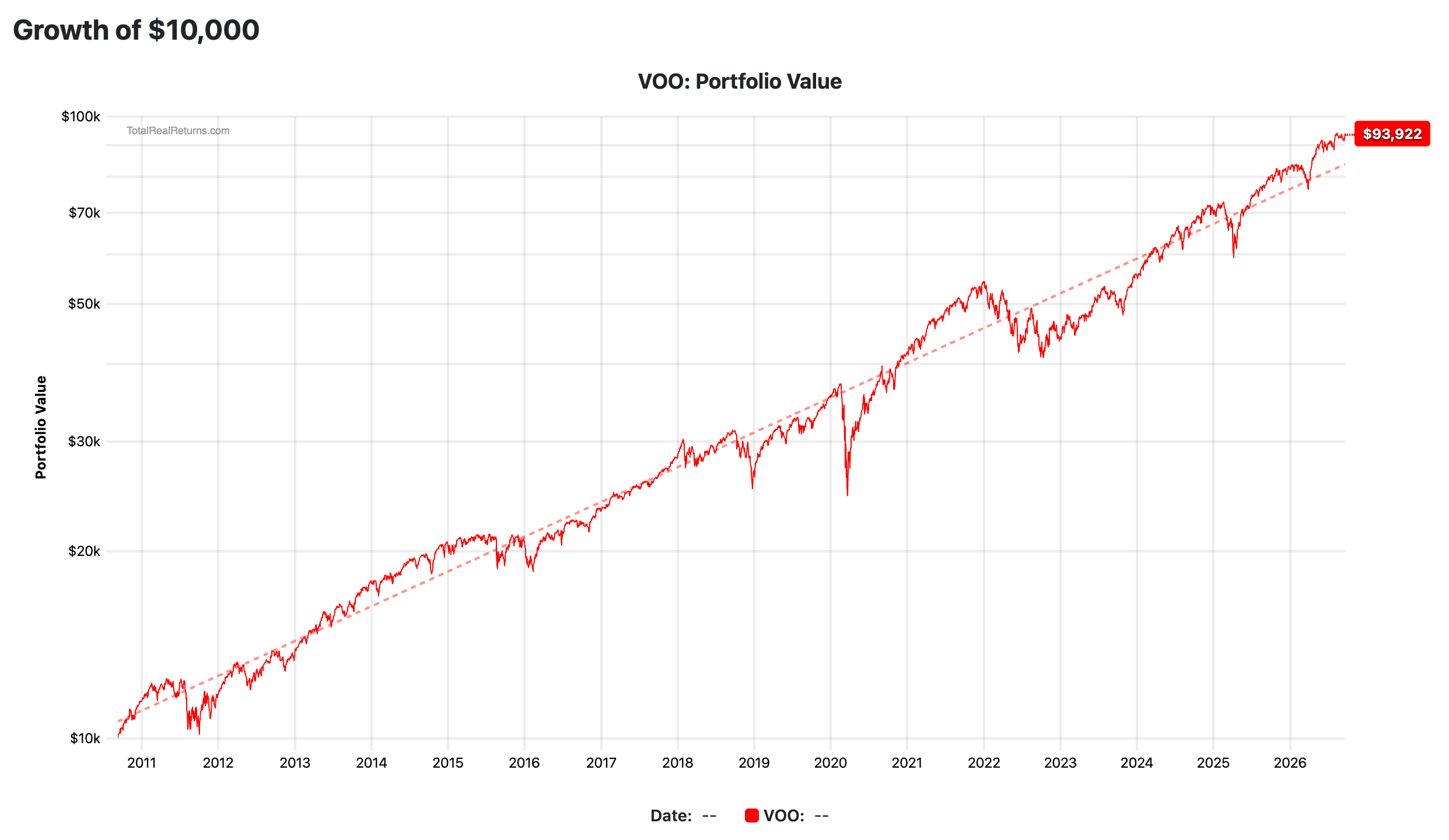
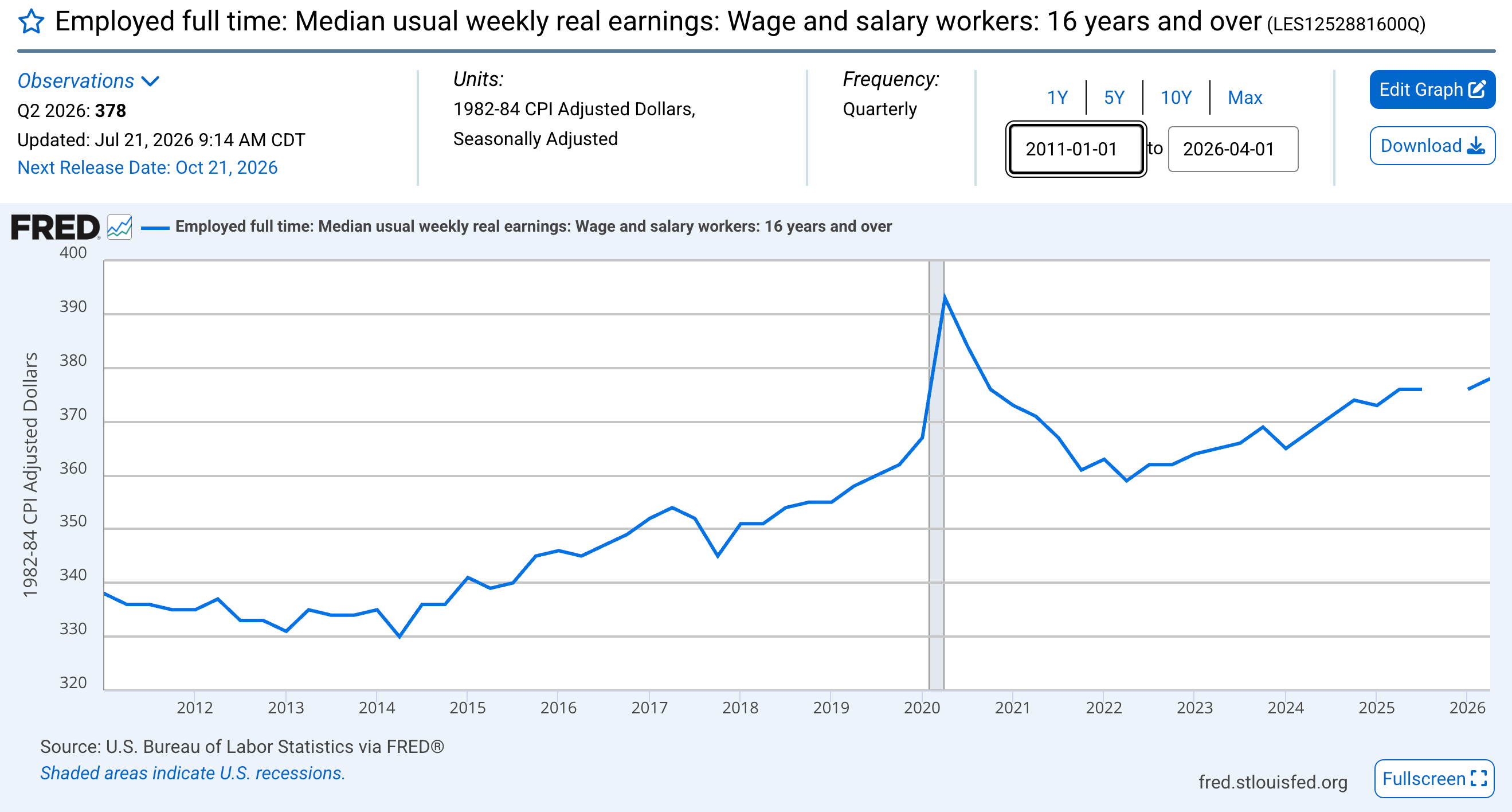
Stocks. Anyone under the age of 30 or so should assume that the S&P is the new 21st century savings account (Trump Accounts are created suggesting this in the first place!). If you don’t do anything and left all your earnings in the S&P you’re up 13% YTD. If you’ve been around for about 15 years it has gone up ~9x in value (wages are not up 9x in 15 years)
Source
Even if you double the performance of real wage growth (assumes prices 2x’d from 2011 to 2026), you’re not even close to the 9x change we saw in the S&P 500 alone.
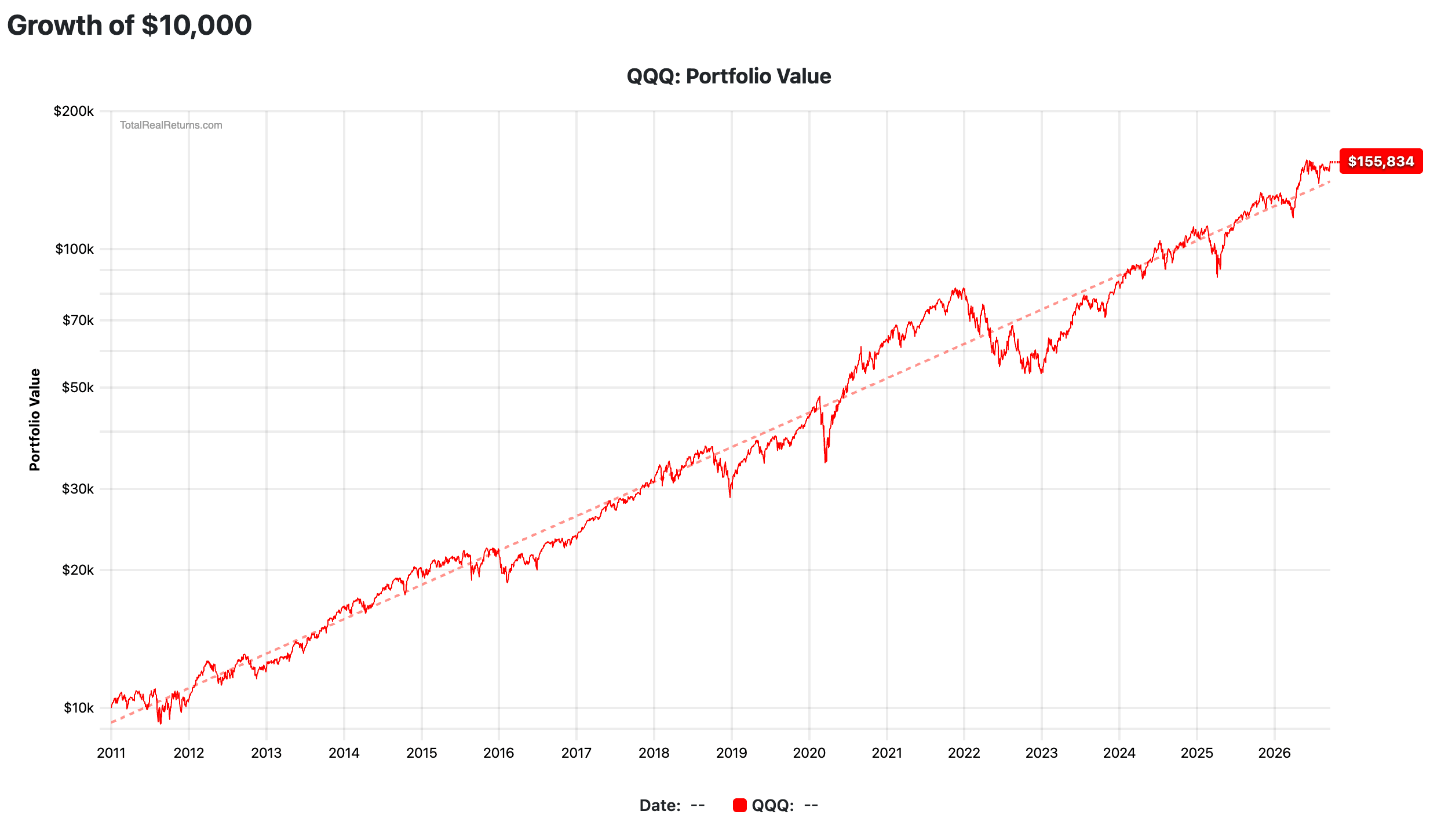
For anyone in the weeds, you know that we’re being nice by using the S&P. If you simply invested in tech and didn’t even touch higher beta stuff (Mag 7, Crypto, Semis etc.) you’re up an enormous ~15x over the same period.
Expectations: If you can hold and remain unemotional, stocks in general should get you 2-5% above the real hurdle rate. The hurdle rate is going to move since the government will pull every trick out of the book to help the debt/gdp ratio (yield curve control, changing the components of inflation etc.)
This means all your income going into these standard ETFs are going to give you a small boost up the socioeconomic ladder.
By default this also means you should really become your own money manager. Paying 1-2% management fees (wealth management, asset management, hedge fund etc.) is not going to work if they are losing to the S&P 500. Giving up control and handing the keys to one of the most important aspects of life (health, relationships, wealth) should come with a massive premium/tax on it. If they are not beating the market by at least 3x their management fee, you’re better off being your own portfolio manager or simply buying the S&P/QQQ.
Who Loses in Financial Repression
Like any government policy, this is a zero sum game. Since money is being taxed and distributed, it means someone is getting a bad deal.
Clear answers are: 1) bond/t-bill holders, 2) fixed income streams - pensions and insurance companies and 3) anyone who has assets < annual income [rough proxy]
Self explanatory. If the goal is financial repression, they will pay out on the debt but it’ll be below the real inflation rate. To keep people locked into them they will claim that inflation is below the treasury rate - as you’re seeing this year the bond market is calling the bluff as war needs to be paid for
Fund Rules. Pensions/Insurance are required to carry certain amounts of govt/risk free product. Many money management funds are also in this camp (think target fund type mutual funds in a 401K). Pensions/insurance is still the most obvious
Assets < Income: This is a good back of the envelope way to think about it. If someone makes $100,000 a year, they need to penny pinch, coupon clip, sleep on an air mattress, bike to work and generally live like garbage until they can get to about $100,000 in investable assets. At that point at least a full year of income is outpacing inflation. The salary is not going to keep pace as we’ve seen for the past 15 years. This is also why the advice of “saving 10% and waiting 40 years to retire” is absolutely terrible. It takes too long to have inflation working as a tailwind for you vs. a headwind
Will people buy? We’ll find out. The odd thing about the whole thing is that it doesn’t even matter. If the govt pulls it off, debt/gdp remains okay for a long, long, long time. If they fail and people stop buying treasuries rates will go to 6, 7 or 8%. At that point the message is clear (monetary debasement and inflation is out of control) which means… you guessed it… owning the index is still pretty safe. All the pricing power is going to be held by the top 50 or so companies in the USA
The Rest is Now Up to You
You can come up with your own framework for calculating the real hurdle rate. We gave out our own simplified overview and asset minimums.
If you think that Tech or S&P or another sector will beat the hurdle rate you need to invest at least 1 year of gross annual income into it. If you don’t then you’re underexposed or you don’t believe in the asset in the first place.
The best tell for what someone believes in is always “what they own” not what they think they understand.
Take a long hard look at your investments and decide 1) if your under allocated or over allocated and 2) if you can hold it through a worst case scenario - job loss, short term market scare, etc.
Good luck anon! Don’t believe any of the data anymore, their mandate is clear. Jack up nominal GDP, keep debt growth as low as possible and give out a rosy inflation number (make it barely believable).
Disclaimer: None of this is to be deemed legal or financial advice of any kind. These are *opinions* written by an anonymous group of Ex-Wall Street Tech Bankers and software engineers who moved into affiliate marketing and e-commerce.
Old Books: Are available by clicking here for paid subs. Don’t support scammers selling our old stuff
How ETH is Staked: Covered (here)
Crypto: The DeFi Team built a full course on crypto that will get you up to speed (Click Here)
Crypto Taxes: We have a suggested Tax Partner and 25% discount code, for information see this post.
Security: Our official views on how to store Crypto correctly (Click Here)
Social Media: Check out our Instagram in case we get banned for lifestyle type stuff. Twitter will be for money