

We are sure many of you are experiencing max pain doing crypto taxes right now - we have our annual recommendation for Tax Software with Summ (f/k/a Crypto Tax Calculator - same as always).
You can access Summ HERE and get 25% off your first year for being a BTB subscriber. Yes this also operates as a ref link. (code: BTB25)
Welcome Avatar!
With the April tax deadline right around the corner, we’re honing in on DeFi taxes.
The DeFi Broker Rule would have required protocols like Uniswap, Aave, and PancakeSwap to provide 1099-DA forms to users and the IRS. Basically, it was a money play for the IRS to get their hands on more crypto dollars.
After Trump was elected, Congress killed this rule. This means you are responsible for all of your record keeping and reporting. If you’ve made money in crypto and DeFi in 2025 you owe taxes, even if those transactions aren’t included in the 1099-DA issued by a centralized exchange. If you lost money in 2025 you should also file to claim a deduction against earned income and to carry your losses forward against future capital gains.
For crypto users, investors, and traders this means you need to have detailed records of your transactions even if you’re using decentralized protocols (or have a tax software pull it all for you).
As usual none of this is legal or financial advice. Every situation is different, and you should seek your own professional advice. This is meant to give you an idea of what’s changing and how you might fit it into your own strategy.
The Rule Got Nixed. What Does That Mean?
1099-DA effectively disappears for decentralized platforms. The repeal removed any legal conditions that would’ve forced DeFi brokers to file Form 1099-DA. That also includes getting rid of any chance of introducing a similar DeFi broker rule without new legislation.
That may be good for DeFi protocols which were facing obligations as “brokers”. For users, if the rule had been kept in place users would’ve gotten a nicely prepared form sent to you from all the DeFi protocols you engaged with. Without it, the risk falls entirely back on you.
I’m a DeFi User. How Do I Do My Taxes Now?
Since you’re not going to be getting a 1099-DA from any decentralized platforms, staying on top of your taxes is your responsibility. If you trade across both centralized and decentralized platforms, you’re going to be dealing with a split system: expect to receive 1099-DAs from brokers like Coinbase AND self-report for your decentralized trading activity.
First, let’s take a step back with a quick overview of how DeFi is taxed. Taxable transactions in DeFi are treated as either capital gains tax or income:
Capital gains tax: When you dispose of crypto through actions such as swapping one crypto for another, selling your crypto, or using your crypto to buy something, you’ll pay capital gains tax.
Income: When you earn crypto through actions such as staking, lending, receiving an airdrop or tokens, you’ll pay income tax.
Keep in mind that some complex DeFi activities, such as participating in a liquidity pool or staking, could result in both capital gains tax and income tax depending on how the protocol works and what happens with your tokens.
Example: You own $5,000 ETH which you decide to stake in a DeFi protocol. The returns you get from staking will be treated by the IRS as income. If you later decide to sell the ETH you earned from staking, this will trigger a capital gains tax event and you’ll owe taxes on your profit (the difference between the cost basis and what you sold it for).
So, how do I self-report my DeFi taxes?
Track your transactions
Whether you get a 1099-DA from a centralized exchange or not, we recommend tracking all your transactions. This includes keeping a record of details like asset type, transaction type, transaction dates, how much you bought/sold the asset for, any transaction fees, and cost basis.
Figure out your cost basis
Cost basis is the fair market value of what you paid for your crypto, and is vital for calculating capital gains and loss when you dispose of crypto. This can be pretty straightforward if you’ve only conducted a few transactions, or are meticulous at record-keeping. However, if you bought crypto at different price points, you’ll need to choose an accounting method to figure out your cost basis.
Keep in mind that as from 2025 tax year onwards, US-based crypto users need to use per-wallet accounting to establish cost basis. We’ve got a whole article on that here.
TLDR: You essentially have to track the cost basis for each individual asset across varying wallets or exchanges separately, rather than combining assets from different platforms.
Report your transactions to the IRS
Reporting DeFi income
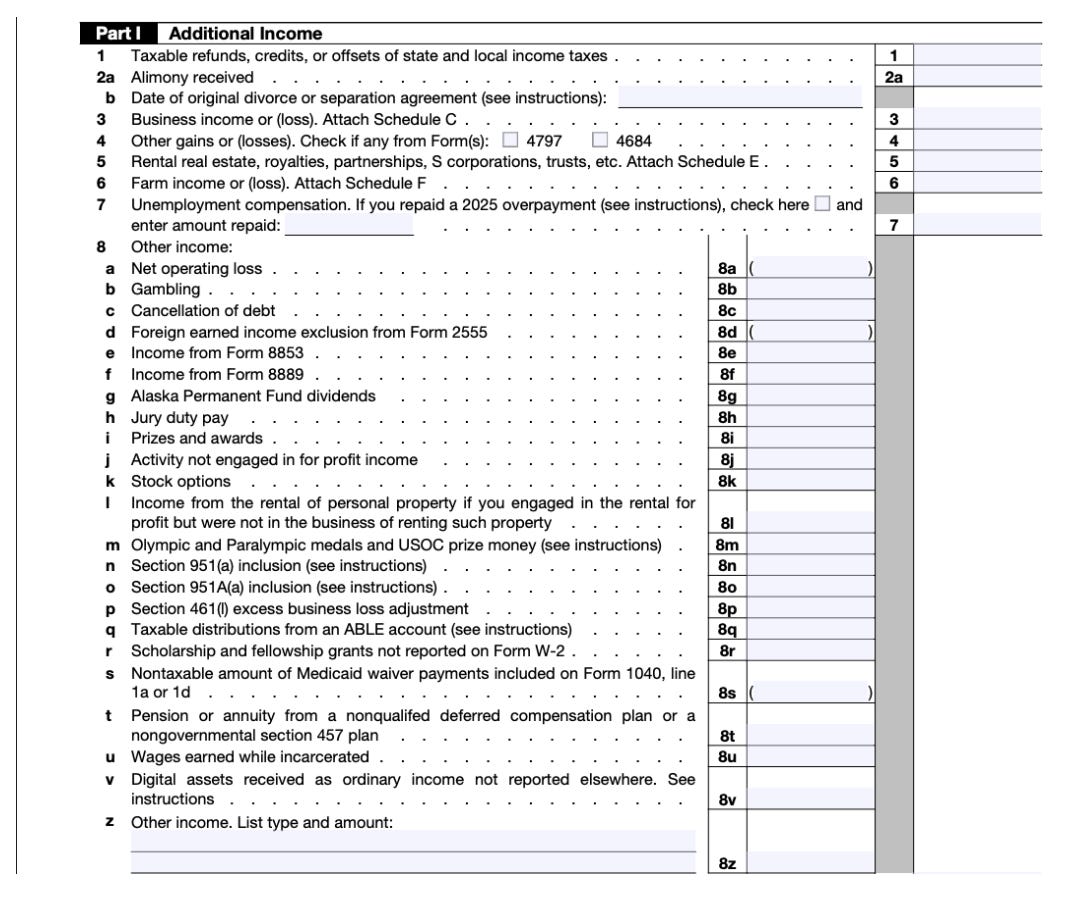
You’ll report the DeFi income you earned under “Other Income” on Schedule 1 Form 1040. Make sure this income is based on the value of the tokens when you received them, or you could end up paying more taxes.
Reporting DeFi capital gains
You’ll report your DeFi capital gains on two forms. First, you’ll report your capital gains and losses from each crypto transaction on Form 8949, then you’ll report your totals for short-term capital gains and losses and long-term capital gains and losses on Schedule D (Form 1040).
Use a crypto tax platform to automate your taxes
Rather than manually tracking all of your transactions and trying to figure out your cost basis, you could use a crypto tax platform like Summ that will automatically do all the work for you.
The platform supports over 2000 protocols and is built to handle per-wallet accounting automatically and complex DeFi transactions, so you can connect with the protocols you use and the numbers (and tax reports) will be sorted for you.
Remember: Decentralized Doesn’t Mean Untraceable
We’ve said this before. Decentralized doesn’t mean it can’t be traced. It’s a myth. If you’re thinking, I’ll just let things slide this year, they’ll never know, think again. The blockchain is a permanent record, visible to anyone, so it may possibly be the worst place to try and hide or evade your taxes. More on that here.
What’s Next for Crypto Regs and Tax?
Crypto tax legislation is being constantly updated, like proposed tax exemptions for low-value stablecoin transactions through the Digital Asset Parity Act. In the updated draft of the act, released March 26, the de minimis exemption for gains under $200 on stablecoin payments was removed.
The new draft also includes the removal of a crypto tax loophole, where wash sale rules previously only applied to stocks or securities, not digital assets. If the legislation goes through, gone are the days where you could sell Bitcoin at a loss and buy it back the next day to claim a tax loss.
These amendments are still in the works, so you don’t need to worry about them for now. Just focus on getting your taxes in before April 15 and make sure you don’t ignore your DeFi taxes.
Sort out your crypto taxes with Summ. Get 25% off your first year using code BTB25.
Disclaimer: None of this is to be deemed legal or financial advice of any kind. These are *opinions* written by an anonymous group of Ex-Wall Street Tech Bankers and software engineers who moved into affiliate marketing and e-commerce.
Old Books: Are available by clicking here for paid subs. Don’t support scammers selling our old stuff
How ETH is Staked: Covered (here)
Crypto: The DeFi Team built a full course on crypto that will get you up to speed (Click Here)
Crypto Taxes: We have a suggested Tax Partner and 25% discount code, for information see this post.
Security: Our official views on how to store Crypto correctly (Click Here)
Social Media: Check out our Instagram in case we get banned for lifestyle type stuff. Twitter will be for money