

Welcome Avatar! After watching yet another heavily levered book go to zero, we figure this is a pretty good time to talk about risk management. It isn’t a popular topic in the age of degeneracy and gambling. However, we’ve noticed that people are quite complacent with everything going “up only”. Usually, this isn’t a great sign.
Recent Blowup in the Hedge Fund World
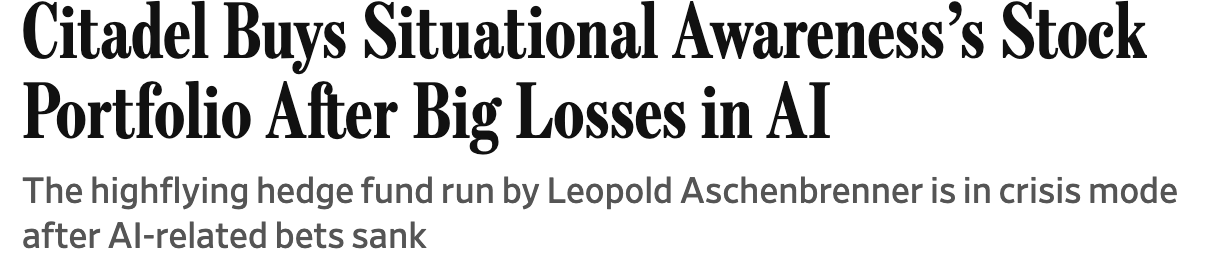
Risk is something that people think about when it is typically too late. Even Citadel almost went under in 2008 due to severity of the financial crisis. Therefore, it can happen to anyone and your age also determines what type of risks are reasonable.
Young People: Negligible risk when it comes to money. Unless born as a trust fund baby, the chances are high that going to zero (losing $50K) isn’t going to change your life. It would hurt but it wouldn’t be a life altering event despite all the propaganda given to kids for life (never take risk, always play it safe etc.)
Middle Age: It gets difficult around here. You have enough information to be dangerous but the stakes are higher. If you’re financially successful, you have to find a way to grow (beat inflation) while removing the potential to go to zero
Older Age: Actually a lot easier here, there is no real point to taking risk anymore. It has to be low cost and high upside. A pretty rare combination as you’re likely living off the cash flow machine you built by this point
Part 1: Shannon’s Demon/Gamblers Ruin
If you make all your decisions based on expected value, chances are extremely high that you’ll end up broke. This confuses people at first because school teaches everyone to just look at Expected Value.
Here is a simple example of an investment outcome in “Stock A”
It goes up 7% with a 95% probability
It goes down 95% with a 5% probability
Expected value = (7%*95%) + (-95%*5%) = 1.9%
Based on simple math most people would say this is a good game to play. Unfortunately, it doesn’t work like that. If you were to continuously play this game, you’d go broke.
If you used $100 and won 20 times in a row, you’d have $386.97. Then the next hit is negative and you’re down to $19.35. Despite winning for 20 straight years you have 1/5th of the money and you’ve lost all of your time as well.
The point here is pretty simple, you need to find investments where you’re still in the game. This one might be useful for a small portion of the book but you shouldn’t be all in due to the blow up risk.
Simplified Even More
Since these high level phrases like Shannon’s Demon/Gamblers Ruin are hard to remember it is a lot easier to think about it like this:
You should hate an investment more as it goes up
You should like an investment more as it goes down
This is entirely counterintuitive. It’s also why retail has terrible returns. If you’re on social media consistently you can quite literally see the emotions develop. As soon as something is consensus it becomes a terrible buy/sell at that point in time.
Various versions of this can be found across a wide range of time frames
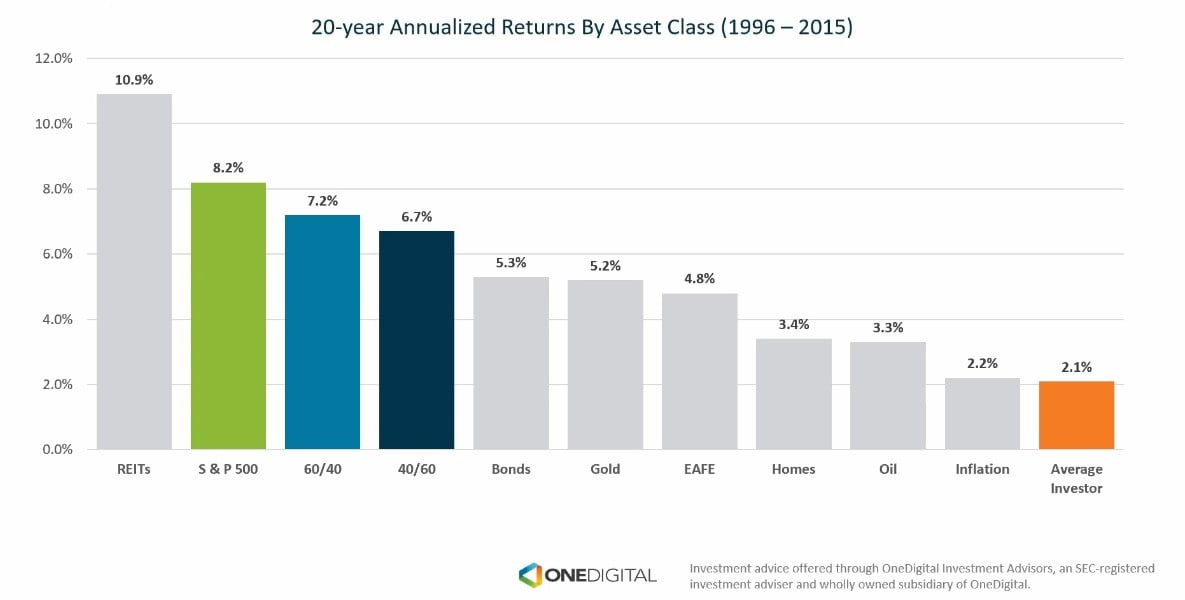
You can actually do this yourself. Go and find the current top 3 trending sectors/stocks etc. See what the most common comment is. Reverse it and that’s probably going to be right some 75% of the time.
Part 2: What to Do About it
This side of the web is basically focused on finding asymmetric opportunities. This is where your upside is substantial and your downside is typically in the -50-60% range (big difference from -95%). The way to find these set ups? You need a clean and congruent view of the next 10-20 years or so.
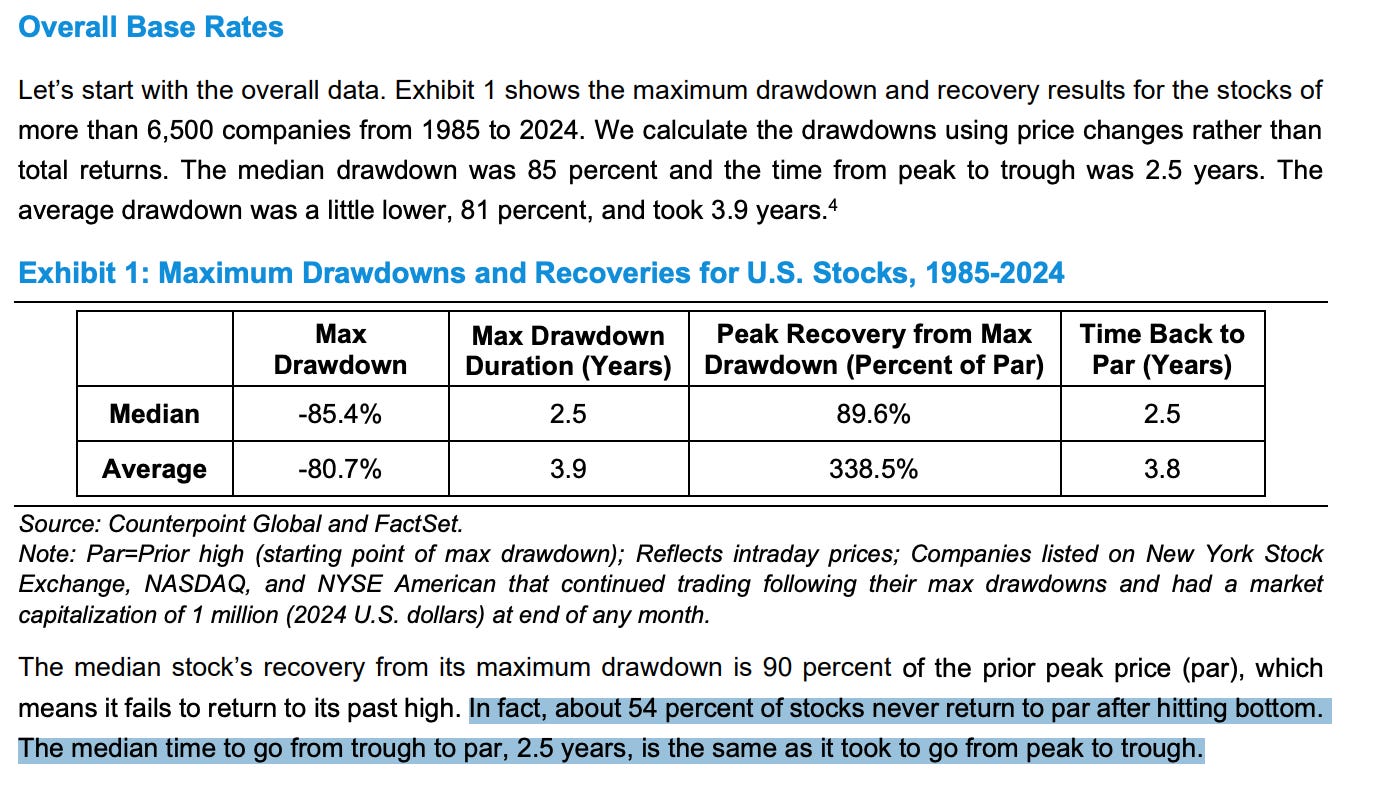
If you have no long-term view of where the world is heading you’ll constantly invest into assets that have more downside than you thought. This is actually proven out by Morgan Stanley which shows that ~54% of stocks never recover to par after a large ~80-85% drawdown.
In addition to that the study shows that “60 percent of the sample failed to match the returns of Treasury bills, destroying $10.1 trillion in value through December 2024. The other 40 percent or so created $89.5 trillion in value. Just 2 percent of the companies produced 90 percent of the aggregate wealth creation of $79.4 trillion, and the top 6 (Apple, Microsoft, NVIDIA, Alphabet, Amazon, and ExxonMobil) alone added $17.1 trillion”
First World View
Decide what is going to drive all the value in the future. Is oil going to suddenly become a new industry? How about financial services? How about restaurants? As you can see, the chances of saying yes to any of those is extremely slim. There is always going to be a new popular apparel brand or food chain. However. Compare that to the number of new restaurants and you’ll see an uglier number
More likely case? People will use more technology, drive operational costs down with software/AI and spend 90%+ of their time staring at some sort of screen (computer, smartphone, VR/AR, etc.)
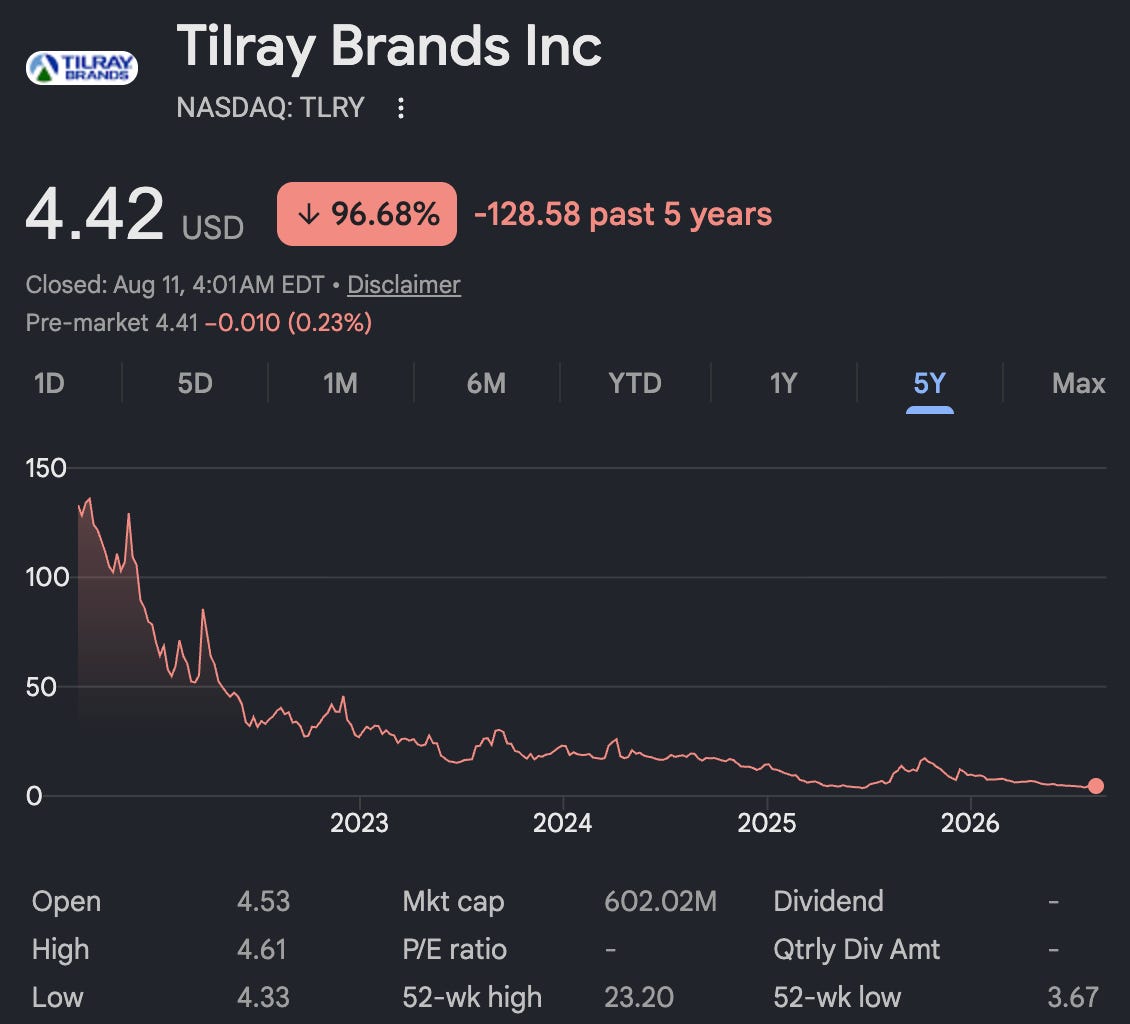
This alone is going to help you avoid concentrated investments in the wrong sectors. If you simply follow what is hot, you might have gotten burned on legalized marijuana which was a long-term commodity product with no defensible moat.
Go Within Tech
Once you’ve solved the general world view you have to go within tech and decide which assets you’re going to be exposed to. You can buy things like crypto, semis and FAANG but you can’t invest in just “one” of those big three. You have to own separate assets within it otherwise you’re not going to be able to hold on when it inevitably goes down 50-60% in a down year.
A Better Book: BTC, ETH, NVDA, SMH, GOOGL, AMZN, TSLA and AAPL. Beyond that you have cash/indexes. This set up has a high tilt to technology but doesn’t have you exposed to only one. If you do it early enough, what happens? One of them goes up a bunch and ends up being a much higher concentration (just how the math works)
A Bad Book: You only own QQQ and SPY. In this case you’re going to be exposed to tech and the broad based market. However, you’re not able to generate any real outperformance. In this case, you better be in middle age to late age because it’s not going to make you rich.
The exception? You recently had a huge amount of business success. In that case you might be diversifying because the equity in your WiFi biz is 5-10x more valuable than all your investments.
Create Different Ways to Win
The world view you have is going to determine all of your success over the next 20 years.
Hate to be that dramatic about it. Just what we’ve seen.
If you don’t have conviction in a world view it will be difficult/impossible to make it. New industries become hot every 3-5 years, old industries make come backs and anything trending on CNBC/Socials is typically the beginning/end of the sub-sector (if it’s a disaster it’s the bottom, if its excitement likely the top from a price perspective).
Concentration > Leverage: Since the majority of our readers are not in retirement age, the right balance is to think “concentration over leverage”. You need concentration to get rich. No one is going to get rich by skipping coffee and investing $10 a month into index funds.
Leverage is different as you can be right and still lose it all. If you had 2x leverage in Bitcoin in 2017, you would have been wiped out in the 2018 bear market. The same can be said of every single fast moving sector. Leopold just got blown out with leverage and he was the golden child of the AI/memory trade. Anyone who simply owned spot since 2021 or so is up millions + stress free.
Good Framework: One we’ve seen work is pretty simple: 1) W-2 paycheck is the funding mechanism, 2) most important first funnel is to your Wi-Fi biz - testing demand building skills until one works - source, 3) your left over money is going to be the 100% match in your company 401K and an investment portfolio.
That’s as simple as it gets. With that flow of funds it’ll be hard to lose. The problem is that most take #1, spend it all (or worse) and then take left over money (if there is anything) and try to buy grand slam home run stocks all the time (the grand slam is actually in your control - your own WiFi/E-com biz).
Summary
If you don’t have a systematic way to invest and a world view, we’d say your chances of getting wealthy are actually quite low. If you call a wealth management firm (larp as a potential client) you can gather the following quickly: 1) people run small businesses, 2) the people who got large sums from investing were practically all tech related and 3) they all had conviction and more importantly could hold onto that position. The last part is what is covered in this post and is heavily ignored during an uptrend (what we’ve seen in general stocks this year). Leverage isn’t needed to get rich, it just takes the headlines.
Part 3: When to Exit Concentration
There are really two times to exit: 1) you hit your numbers and 2) you see everyone in your social circle talking about the asset. Either one of these is a good reason to pack up for a while and look elsewhere.
Numbers: We’ve said that around 99% of people will be fine with a paid off home and $3-5M liquid. At this level we’d say the move is simple “diverisfy and invest all your earned income aggressively”. This is the right balance because you’re going to work for the rest of your life. We don’t know a single successful person who decided to do nothing. Those gap years become boring by month 6. Feel free to take time off, but, we all know you’ll be doing something after.
Put that money away, $3-5M in diversified boring stuff, every single cent you make after? Shipped into risk/asymmetric investments. VC type investors have been doing this for decades now.
Note: If you’re worried about inflation, you would simply double it in 20 years. In 2046, the same lifestyle is likely going to require a paid off home and $6-10M. We’re assuming a 3.5% inflation rate since nice areas typically go up slightly more than inflation at all times.
Everyone is Getting Rich: If you see this phrase in your circles, it’s time to run. If you’re investing in say 5 sectors, it’ll happen to at least one of them every 2-3 years or so. It means you cut that position significantly (take out principal at minimum). That’ll allow you to survive the inevitable -50% that’ll come sooner than expected.
The odd part about this is that most will buy the second move up. They get addicted to the fast gains and don’t have the patience to wait out a meaningless 6-12 months. If you know that everyone is “getting rich” and you can see more and more selling of the stock/crypto, it’s time to avoid ruin. Having a $1M go to $500K vs. having it go to $750K is an outrageous difference. The first one feels like you wasted your time, the second one hurts but you’re too busy building positions in other sectors to notice.
Final Notes
This is meant to be high level and will hopefully help you develop your own internal tracker and model.
You should be using more social/emotional signals and drop your reliance on various valuation metrics.
Simple Example of Anomaly Herd Interest Spike
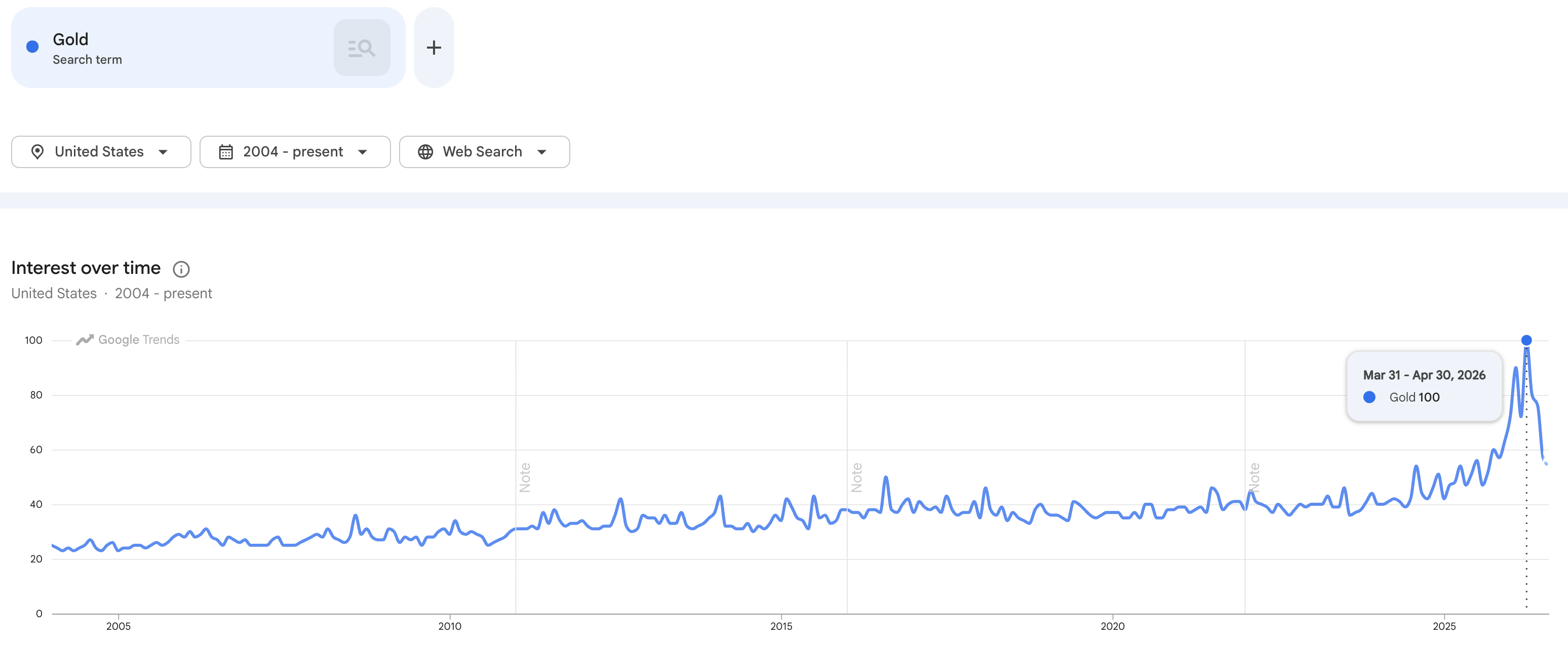
In addition, you should have no ruin risk. People say that starting a business is potential ruin. It is not. If you build it using your W-2 income, you’re simply double dipping.
Ruin risk is a 100% concentration into something you have no control over.
With a W-2 to WiFi to Investing flow chart, it is difficult to go to zero without leverage.
Disclaimer: None of this is to be deemed legal or financial advice of any kind. These are *opinions* written by an anonymous group of Ex-Wall Street Tech Bankers and software engineers who moved into affiliate marketing and e-commerce.
Old Books: Are available by clicking here for paid subs. Don’t support scammers selling our old stuff
How ETH is Staked: Covered (here)
Crypto: The DeFi Team built a full course on crypto that will get you up to speed (Click Here)
Crypto Taxes: We have a suggested Tax Partner and 25% discount code, for information see this post.
Security: Our official views on how to store Crypto correctly (Click Here)
Social Media: Check out our Instagram in case we get banned for lifestyle type stuff. Twitter will be for money